

Rescue efforts are currently underway in Nepal after a tragic avalanche claimed the lives of several climbers.
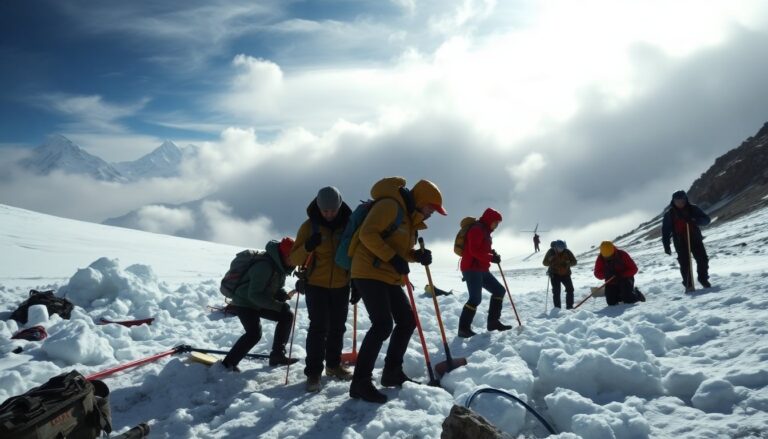
Following a devastating avalanche at Mount Yalung Ri in Nepal, search and rescue teams are working diligently to locate the bodies of seven climbers who tragically lost their lives. The incident occurred early on Monday, when heavy snowstorms hindered the ability of rescuers to reach the base camp, which is situated at an elevation of 4,900 meters (16,070 feet).
Rescue operations resume amidst challenging conditions
As weather conditions improved the following day, a helicopter was finally able to access the site, allowing rescuers to start digging through the thick layers of ice and snow. According to Dolkha district police chief Gyan Kumar Mahato, four survivors were successfully evacuated by helicopter and transported to Kathmandu for medical care.
Among those receiving treatment are two French climbers, who were caught in the avalanche.
Survivors recount their harrowing experiences
Isabelle Solange Thaon, aged 54, shared her heartbreaking story from her hospital bed, revealing that her husband, Christian Manfred, did not survive the incident.
“We were fortunate because we were positioned on the left side,” Ms. Thaon explained. “We managed to leap over rocks and navigate through the snow until help arrived.” Tragically, her husband was not as lucky; he suffered fatal injuries when rocks struck his head during the avalanche. She emphasized the horror of the situation, noting that others were buried beneath approximately six meters (20 feet) of snow, making rescue impossible.
Details surrounding the victims and the climb
In addition to the French nationals, it has been confirmed that two Nepali mountain guides were among the deceased, though the identities of the remaining victims are still being verified. By Tuesday afternoon, rescuers had successfully retrieved at least three bodies from the snow, as efforts continue in the challenging alpine environment.
Understanding Mount Yalung Ri’s climbing challenges
Mount Yalung Ri, standing at 5,600 meters (18,370 feet), is often regarded as a suitable destination for novice climbers. However, despite its reputation, the mountain can present unforeseen dangers, as evidenced by this tragic event. The area offers breathtaking views and a unique experience for those brave enough to attempt the climb, but conditions can change rapidly, leading to potentially deadly situations.
As the rescue mission progresses, teams remain focused on recovering the remaining bodies, while also ensuring that safety protocols are observed for the ongoing search. The mountain, with its stunning landscapes, demands respect and caution from all who dare to explore its heights.
Impacts on the climbing community and future expeditions
This avalanche has sent shockwaves through the climbing community, highlighting the inherent risks associated with high-altitude expeditions. For many climbers, the thrill of conquering a peak is often coupled with a deep respect for the unpredictable nature of the mountains. As discussions surrounding safety regulations and climbing practices emerge, this incident serves as a stark reminder of the potential dangers that can arise in such unforgiving environments.
In the aftermath of this tragedy, it is essential to foster a culture of safety and preparedness among climbers. This includes thorough training, proper equipment, and a comprehensive understanding of the terrain. The Yalung Ri experience, while rewarding, now underscores the vital importance of vigilance in the face of nature’s unpredictability.
Ultimately, the ongoing rescue operations at Mount Yalung Ri are not just about recovering bodies; they reflect a broader commitment to ensuring the safety of climbers and honoring those who have lost their lives in pursuit of adventure. As the sun sets on the majestic peaks of Nepal, the hope remains that future expeditions will be undertaken with a greater appreciation for the challenges that lie ahead.
