

Seven climbers were lost in a devastating avalanche in Nepal, triggering swift rescue operations in treacherous conditions.
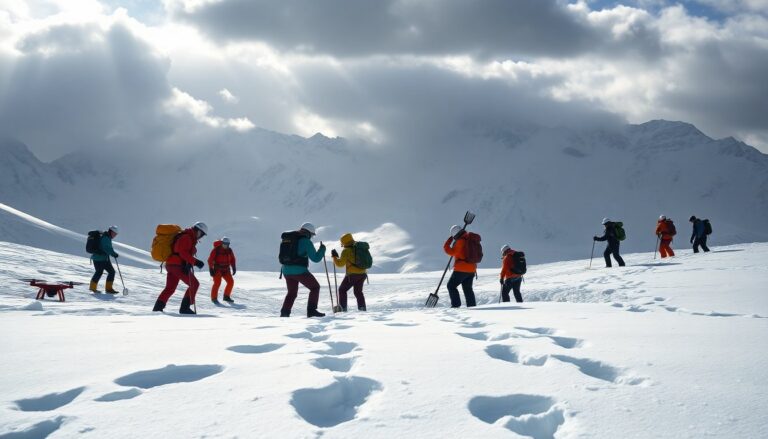
In a tragic turn of events, a powerful avalanche struck Mount Yalung Ri in Nepal, claiming the lives of seven climbers. This incident unfolded in the Dolakha district at the mountain’s base camp, situated at an elevation of approximately 4,900 meters (16,070 feet).
The avalanche struck early on a Monday morning, wreaking havoc as climbers were gearing up for their ascent.
Rescue teams faced significant challenges, including severe weather conditions that initially hampered their efforts. Snowstorms blanketed the area, making it impossible for search and rescue operations to commence immediately.
However, as the weather improved, a helicopter was deployed to the site, enabling rescuers to start their painstaking work of locating and retrieving the bodies of the victims.
Details of the avalanche incident
According to reports, the avalanche occurred around 9:00 AM local time, striking a team engaged in preparation for a summit attempt on the 5,630-meter (18,370 feet) peak.
The group, consisting of both foreign climbers and local guides, was taken by surprise as a sudden surge of snow and ice descended upon them, leaving little time for escape. Among the deceased were three Americans, one Canadian, one Italian, and two Nepali nationals, highlighting the international nature of the climbing team.
Rescue efforts and challenges
District Police Office Deputy Superintendent Gyan Kumar Mahato has confirmed the ongoing search and rescue operations. As of Tuesday afternoon, rescuers had successfully recovered at least three bodies from the icy debris. Despite the improving weather, conditions remain precarious, with visibility issues and unstable snowpack posing ongoing risks to rescue teams. Four climbers are still unaccounted for, and the search continues with added manpower from the Nepal Army and local guides.
Survivor accounts and emotional impacts
Among the survivors is Isabelle Solange Thaon, a French climber who recounted the harrowing experience while recovering in a Kathmandu hospital. She shared that she and her husband, Christian Manfred, were caught in the avalanche, but she managed to survive alongside another climber, Didier Armand. “We were fortunate to be on the left side and managed to leap over the rocks before we were engulfed by the snow,” she recalled, reflecting on the chaos of that morning. Sadly, Christian did not survive, having suffered severe injuries when struck by rocks.
Isabelle expressed her sorrow and disbelief at the loss, emphasizing the cruel nature of the accident. She mentioned that others in their group were buried under approximately six meters (20 feet) of snow, making rescue efforts increasingly challenging.
The impact of weather conditions
The timing of this avalanche coincides with severe weather patterns in the region, attributed to the influence of Cyclone Montha, which recently swept through the area, causing heavy rains and snowfall across the Himalayas. Meteorologists warn that these unstable conditions have contributed to the avalanche, raising alarms about the safety of climbing activities during the late autumn season. The unpredictability of Himalayan weather has become a pressing concern for adventurers and authorities alike.
In a broader context, this tragic event underscores the risks associated with mountaineering in Nepal, a country renowned for its towering peaks and challenging climbing routes. Each year, thousands of climbers flock to Nepal, drawn by the allure of its majestic mountains, yet the increasing unpredictability of weather patterns poses significant threats to their safety.
As rescue teams continue their search for the missing, authorities have issued warnings to climbers in the region to exercise caution due to the ongoing adverse weather. The situation remains fluid, and efforts to recover the remaining climbers are ongoing, with hopes of bringing closure to the families affected by this devastating incident.
