A ground-level report from Chornobyl's exclusion zone exploring persistent radiation, deserted towns and how conflict is reshaping risk
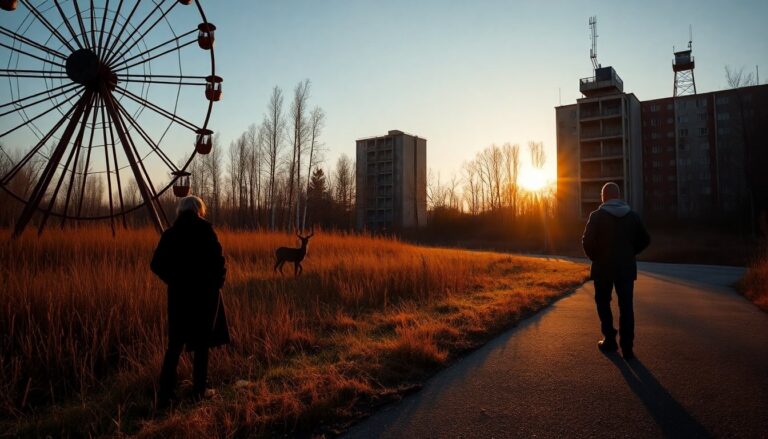
The disaster at Chornobyl continues to shape a forbidding landscape decades after the initial event. In this episode of The Take from Al Jazeera, reporter Nils Adler guides listeners through the zone to show how enduring radioactivity and abandoned urban fabric intersect with new pressures from nearby conflict.
The narrative moves beyond archival images to examine living systems—both human and ecological—that now respond to a place emptied of normal life yet crowded with new dangers. This introduction frames the episode’s central question: what does long-term nuclear contamination look like when the geopolitical environment changes around it?
Current state of the exclusion zone
The territory commonly called the exclusion zone remains a landscape of contrasts: areas that were evacuated and left to lapse into decay sit alongside pockets where natural processes have advanced without human interference. Observers note persistent levels of radiation in many locations, even if readings vary according to soil composition, vegetation cover and prior cleanup efforts.
Within this context, the built environment—schools, apartment blocks and municipal infrastructure—stands as evidence of sudden human departure. The episode emphasizes the zone as a living laboratory for understanding contamination, recovery and the unintended consequences of abandonment in a place that is legally restricted yet ecologically active.
Radiation and environmental dynamics
Reporters describe how the legacy of contamination continues to shape ecosystems: some areas retain high concentrations of radioactive isotopes in surface materials, while others show reduced levels as decay and dispersion occur. The program treats radioactivity not as an abstract metric but as a physical force that influences soil chemistry, plant succession and animal movement. Interviews with scientists and on-the-ground observations reveal how contamination maps do not always match visible decay, complicating efforts to predict exposure. The use of protective measures and monitoring has become routine for those entering the zone, highlighting how technical controls and ongoing surveillance remain central to managing long-term nuclear risk.
Wildlife resurgence and urban emptiness
One of the program’s striking contrasts is the return of wildlife to areas that people once occupied densely. Without routine human activity, many species have expanded into the region, creating an image of nature reclaiming space. At the same time, human-made structures continue to deteriorate, and former neighborhoods stand frozen in time. The episode interrogates whether the visible return of flora and fauna indicates a recovery from contamination or simply reflects the absence of people. This duality—abandoned urban settings hosting thriving animal populations—raises complex questions about ecological health, habitat quality and what environmental recovery means in a radioactively altered landscape.
How conflict has reshaped risk
Beyond the long shadow of the initial disaster, recent hostilities in surrounding areas have introduced a new dimension of danger. Military movements, shelling near sensitive sites and the potential for damage to infrastructure increase the probability of unintended releases or disruptions to monitoring systems. The episode explains how the presence of armed forces and combat operations can degrade containment measures and complicate evacuation plans, turning a managed, if imperfect, hazard into one with unpredictable immediate consequences. Listeners are urged to consider not only the legacy contamination but also the dynamic risks introduced when conflict overlaps with nuclear-affected territories.
Military activity and nuclear safety concerns
The program outlines specific pathways by which hostilities can heighten danger: damage to storage facilities, restricted access for technicians, and interruptions to routine sampling and maintenance. These factors can undermine the careful, long-term work required to keep risks at acceptable levels. The discussion frames military risk as an accelerant that can transform chronic hazards into acute crises. Experts interviewed in the episode stress the importance of preserving monitoring capabilities and contingency planning even as security conditions evolve, pointing to the need for international attention and cooperation when conflict touches nuclear-affected zones.
Implications and the questions ahead
Ultimately, the episode does not offer neat answers but presents a set of urgent questions: how should societies manage territories that are both ecologically regenerating and still contaminated? What responsibilities do governments and international organizations have when conflict increases the likelihood of new releases? The report highlights that the story of Chornobyl remains relevant because it illustrates the long tail of nuclear events—where environmental persistence, social choices and geopolitical shifts meet. The episode credits include producers Marcos Bartolome, Sonia Bhagat, and Chloe K Li, contributors Spencer Cline, Tuleen Barakat, and Catherine Nouhan, and host Malika Bilal. Editing was done by Tamara Khandaker and Noor Wazwaz; the sound designer is Alex Roldan; engagement producers are Adam Abou-Gad and Vienna Maglio; video editors are Hisham Abu Salah and Mohannad al-Melhem; and Alexandra Locke is the executive producer. The episode features Nils Adler as the reporting journalist and invites listeners to connect with @AJEPodcasts on social platforms.