Expect aurora displays over Scotland and possibly northern England as fast solar wind raises the chance of visible northern lights; check live forecasts and sky clarity
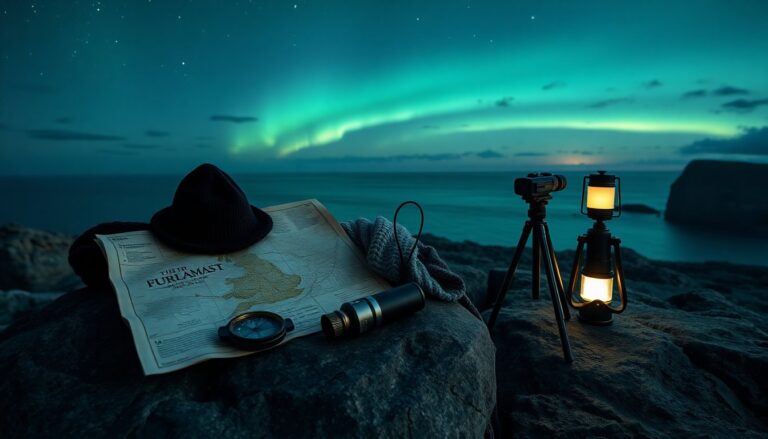
The Met Office has raised the prospect that the northern lights may be visible across parts of the UK on Saturday night, 18 April, with a reduced likelihood on Sunday night, 19 April. Forecasts link the enhanced chance of aurora to the arrival of fast solar wind and fluctuating geomagnetic conditions, and they emphasise that clear skies will determine how much of the display reaches the horizon.
Local visibility will depend on both the strength of the event and the absence of cloud cover; photographers and skywatchers in northern Scotland and northern England should be prepared to head to darker viewing spots if conditions permit.
International space weather agencies have also highlighted activity this window.
The Met Office issued a space-weather headline indicating G1–G2 minor to moderate storm conditions on day 1 (19 Apr), while NOAA and other forecasters noted a G2 geomagnetic storm risk for the night of 17–18 April 2026, with a possibility of isolated G3 intervals.
The combination of a new moon on 17 April and predicted periods of darker skies improves chances for visually striking aurora, and real-time tracking apps can help observers follow the evolving outlook.
What is powering this uptick in activity?
The immediate driver is an influx of heightened solar wind originating from a coronal hole and associated fast solar wind streams. Forecasters observed background winds near 370 km/s that increased to approximately 500–600 km/s as the fast stream arrived, with models suggesting a peak near 700 km/s on day 1. No major Earth-directed coronal mass ejections (CMEs) were identified as direct hits, though eruptions were noted off the Sun’s limb. The interplanetary magnetic field (IMF) has shown variable strength, and the north–south component (Bz) plays a pivotal role: when Bz turns sustained southward, solar energy couples more effectively with Earth’s magnetosphere and auroral displays intensify.
Where to look and why location matters
The auroral oval is the band around the magnetic pole where auroras are most likely; typical viewing locations include northern Norway, Iceland, parts of Canada and the higher latitudes of the UK. For this event, guidance suggests that Scotland and possibly northern parts of England will experience the best chance of seeing the aurora borealis late on 18 April, with a lower but non-zero chance on 19 April. Although the best seasonal window for the northern lights is often cited as September through late March due to longer nights, strong solar drivers like coronal hole high-speed streams can produce displays outside that core period, especially when geomagnetic indices rise.
Practical viewing and photography tips
If you plan to photograph the event, basic settings recommended by experienced aurora hunters are a useful starting point: use a mirrorless or DSLR camera with a wide aperture (for example, f/2.8), an ISO around 1600, and exposures from 2 to 10 seconds, depending on the brightness of the display. Stabilise the camera on a tripod, shoot in RAW if available, and avoid the ultra-wide lens if you seek sharper detail. Modern smartphones with a Night Mode or Pro Mode can also capture aurora under the right conditions—secure the phone, use a timer or remote trigger, and experiment with long-exposure options to reveal colours that sometimes appear muted to the eye but vivid in images.
How forecasts and indices explain what you might see
Space weather services express geomagnetic disturbance in both the Kp index scale (G1–G5 categories) and storm-class terms. A G2 (moderate) event tends to push aurora visibility to higher mid-latitudes, while a G3 (strong) interval can allow displays to be seen several hundred miles farther south. The Met Office warned of G1–G2 activity on 19 Apr, and NOAA produced watches for 17–18 Apr 2026, noting a corotating interaction region (CIR) that can amplify solar wind conditions ahead of a high-speed stream. For the most reliable, minute-by-minute outlooks, consult live tools such as NOAA’s 30-minute aurora forecast or dedicated apps like My Aurora Forecast and Aurora Now.
Final practical reminders
Because aurora visibility responds to rapidly changing solar and geomagnetic inputs, be prepared for short-lived displays and local variability; cloud cover can erase an otherwise strong event for a particular town while a nearby location enjoys clear skies. Stay safe if driving to remote viewpoints, dress for cold nighttime conditions, and keep battery packs warm as low temperatures reduce power. Check updated advisories from the Met Office and NOAA before heading out, and use live solar wind data to refine expectations. Clear skies and wide eyes—if conditions align, this active period could reward observers with a memorable auroral show.