

Cuba is currently experiencing a critical energy crisis due to the increasing impact of US sanctions and the depletion of oil supplies.
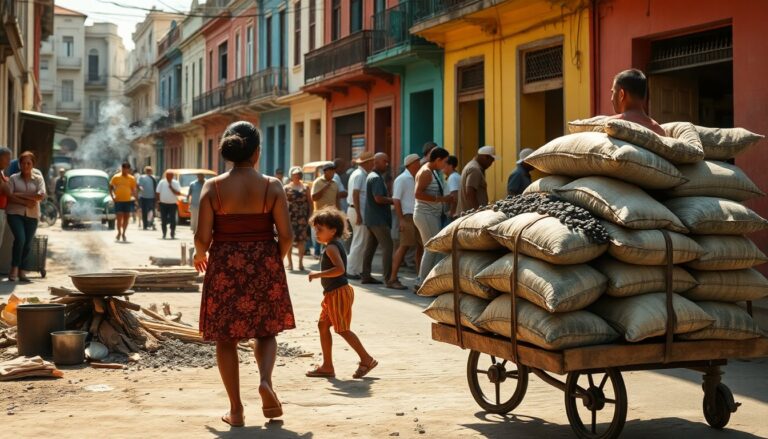
Cuba is facing a significant energy crisis, worsened by tightened US sanctions on oil supplies. This crisis has led to fuel rationing and prolonged power outages, deeply impacting the daily lives of its 11 million residents. Families are increasingly turning to traditional cooking methods, such as using wood and coal, as resources become increasingly scarce.
In response, President Miguel Díaz-Canel has implemented emergency measures, including reduced work hours and restrictions on fuel sales. The ongoing political upheaval in Venezuela, Cuba’s closest ally, has intensified the challenges faced by the island nation.
The state of Cuba’s energy supply
As the fuel shortage escalates, Deputy Prime Minister Oscar Pérez-Oliva Fraga has outlined government strategies to address the crisis. The Cuban government plans to introduce a four-day workweek for state employees, significantly reduce interprovincial transport, and close many tourism facilities.
Schools will operate with shorter hours, and attendance requirements at universities will be relaxed. Pérez-Oliva asserted that Cuba will confront these challenges, stating, “We will not collapse.”
Prioritizing essential services
Amid these hardships, the government has opted to prioritize fuel for essential services such as public health, agriculture, and national defense. Furthermore, there is a commitment to expand renewable energy initiatives, particularly solar energy, to diversify energy sources and lessen dependence on foreign oil.
The implications of US policy
Cuba’s current predicament stems from decades of stringent economic sanctions imposed by the United States. Since the Cuban Revolution in 1959, these sanctions have severely hampered the nation’s economy and isolated it from international markets. Cuba has relied heavily on oil imports from countries like Venezuela and Mexico, but recent geopolitical events have disrupted these supply chains.
After the US military operation that led to the capture of Venezuelan President Nicolás Maduro, the US has blocked Venezuelan oil shipments to Cuba, which are critical for the island’s energy needs. Former President Trump labeled Cuba a national security threat and threatened tariffs on countries supplying oil to the island, complicating the situation further.
Calls for dialogue
In light of these challenges, President Díaz-Canel has expressed Cuba’s readiness to engage in dialogue with the US. He advocates for discussions to occur without preconditions and in a manner that respects Cuba’s sovereignty. Despite the tense environment, he remains optimistic about constructive engagement that could foster relief and mutual understanding.
The role of international organizations
The United Nations has raised serious concerns regarding the humanitarian implications of the energy crisis in Cuba. UN Secretary-General António Guterres has warned that the humanitarian situation could deteriorate if Cuba’s oil needs remain unmet. He emphasized the importance of respectful dialogue while adhering to international law.
UN officials in Havana have reported that many Cubans are currently facing rolling blackouts, with the economic downturn disproportionately affecting vulnerable populations. The situation is critical, with some estimates indicating that Cuba’s oil reserves may only last a few weeks at the current consumption rate.
Future prospects
As the country navigates this challenging situation, there are increasing calls for innovative solutions to ensure energy sustainability. The move towards renewable energy, particularly solar power, could offer a long-term solution for Cuba. However, the immediate future remains uncertain as the government strives to balance limited resources against external pressures.
