The White House announced that China will purchase at least $17 billion in US agricultural products each year through 2028 after Trump’s Beijing summit with Xi, a move that includes beef and poultry access restorations but leaves several trade and political questions open.
On May 18, 2026 the White House published a fact sheet detailing outcomes from President Donald Trump’s two-day summit with Chinese leader Xi Jinping. According to that release, Beijing has committed to buy at least $17 billion worth of United States agricultural goods per year through 2028.
The document clarifies that the 2026 target will be applied on a proportionate basis for the remainder of the year. This new pledge is presented as an addition to an earlier soybean commitment and comes amid cautious optimism from US farm groups and lingering skepticism from traders.
The White House description frames the summit as a step toward expanded economic engagement: beyond purchase volumes, it highlights restored meat market access and the creation of bilateral oversight bodies. Yet the announcement leaves several items vague — notably whether specific tariff changes were agreed and how Beijing will operationalize its buying plans.
China’s own readouts were less explicit, and at the time of the White House release the Chinese government had not issued a matching confirmation.
Details of the agricultural commitment
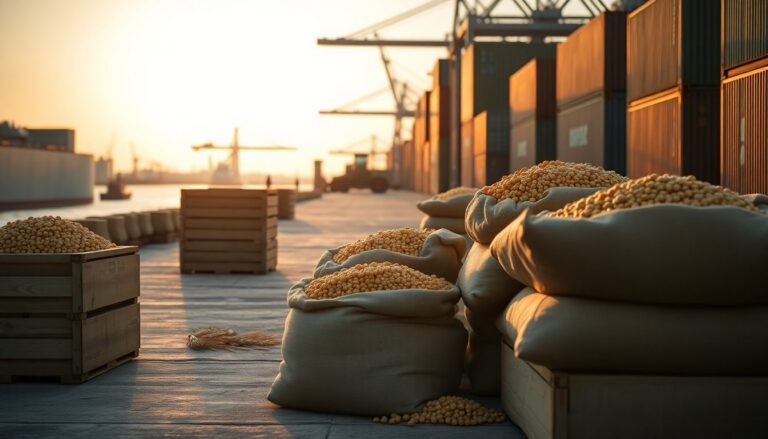
The White House said China will purchase $17 billion annually in a range of farm products, supplementing a prior pledge that included an agreed minimum of 87 million metric tonnes of US soybeans made at talks in South Korea last October. In practical terms, the package also included the renewal of more than 400 expired authorizations for US beef production facilities, effectively restoring large swaths of the US export market. In addition, China agreed to resume imports of US poultry from states that the US Department of Agriculture designates as free of avian influenza. For many exporters, renewed certification and logjams at customs will determine how quickly shipments resume at scale.
What the purchases mean for farmers and markets
Analysts say the headline number could provide a near-term lift to agricultural sentiment, but they caution the figure alone does not guarantee immediate shipments. Over recent years US farmers faced pressure from depressed crop prices, rising input costs and shifting global demand — notably when China turned to cheaper Brazilian soybeans after meeting earlier US volumes. In 2026 US agricultural exports to China totaled roughly $24 billion, including around $12 billion in soybeans, with smaller amounts in cotton and sorghum. Those flows dropped sharply the following year amid trade tensions.
Trade architecture and unresolved questions
Beyond purchase commitments, the White House said the two leaders agreed to set up two new governance forums: the US-China Board of Trade and the US-China Board of Investment, intended to manage trade and investment issues at a higher level. The fact sheet also mentions US concerns about supply restrictions on critical minerals and promises of cooperation. However, the release was silent on concrete tariff rollbacks; President Trump later told reporters that tariffs were not discussed during the visit. Chinese officials, for their part, reported progress on mutual tariff reductions but did not specify products or timelines.
Past commitments and credibility concerns
Observers point to previous pledges that fell short as a reason for caution. An earlier agreement negotiated in 2026 to boost Chinese purchases of US goods by about $200 billion over two years was not fulfilled, partly because of the pandemic but also because targets were widely viewed as ambitious. That history helps explain why markets and farmers are watching for concrete purchase orders, logistics arrangements and enforcement mechanisms tied to the new $17 billion figure.
Geopolitical context and broader summit outcomes
The summit’s readouts extended beyond trade. The White House said both leaders affirmed that Iran should not have a nuclear weapon, agreed on the need to keep the Strait of Hormuz open and pledged coordination on issues like the denuclearization of North Korea. Beijing’s statement stressed the importance of finding settlements that accommodate all parties’ concerns rather than echoing the exact phrasing on Iran, and both sides largely avoided direct mention of Taiwan in official summaries. Analysts note that Xi warned of potential “clashes and even conflicts” if cross-strait issues are mishandled, underscoring the diplomatic delicacy surrounding the visit.
Market implications and next steps
For the agricultural sector, the immediate metrics to watch are purchase orders, shipping schedules and reinstatement of export certifications. If China follows through, the boost could help US producers still grappling with low prices and high input costs. Yet until Beijing provides its own public confirmation and implementing teams turn pledges into contracts, uncertainty will remain. Both governments said they would continue negotiations through the newly announced boards, leaving trade professionals to parse incremental announcements for signs that the commitments will translate into sustained agricultural trade.
Final note
While the May 18, 2026 White House fact sheet outlines a substantial new commitment on paper, the ultimate test will be whether buyers, inspectors and logistics networks convert that pledge into regular commercial flows. The outcome will have meaningful consequences for farmers, exporters and global commodity markets as officials on both sides move from ceremonial gestures to concrete implementation.