Britain unveils 38 fresh sanctions aimed at cutting Russian oil profits, disrupting shadow shipping and blocking crypto routes to the war effort.
The United Kingdom announced a sweeping sanctions package on October 8, 2026, targeting a broad network that fuels Russia’s military operations. In total, 38 individuals, companies and vessels were placed on the UK’s sanctions list, ranging from major oil producers to obscure crypto exchanges that help evade financial restrictions.
The move signals a sharpening of Britain’s resolve to choke the revenue streams and supply chains that sustain the conflict.
Britain’s approach this time is notably comprehensive. It not only targets the obvious profit engines—large state-linked oil companies—but also the shadowy maritime network that disguises oil shipments, the digital finance platforms that move billions through crypto, and the suppliers of components deemed essential for ballistic missiles and drones.
By striking at every layer, the UK hopes to make it harder for Russia to reroute funds or replace critical hardware.
Strangling Russia’s oil earnings
The package adds two more Russian oil producers—Zarubezhneft and INK Capital—to the blacklist.
With these designations, sanctions now cover more than 90% of Russia’s total oil production capacity, making the United Kingdom the first G7 nation to effectively blanket the sector. The intent is two-fold: to blunt the flow of oil-derived cash that finances the war and to block the practice of “rebadging” crude under the name of an unsanctioned entity, a tactic previously used to sidestep restrictions.
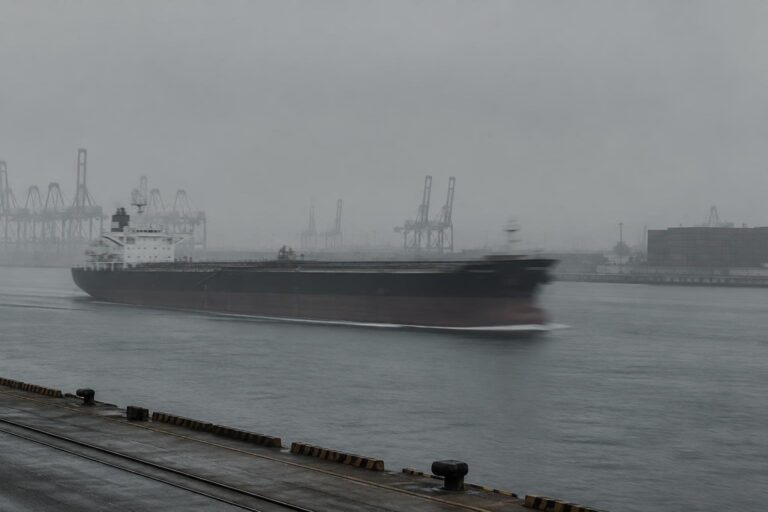
Beyond the producers, the UK also sanctioned twelve vessels operating as part of Russia’s infamous shadow fleet. These ships, often over two decades old, routinely sail under false flags and employ deceptive routing to conceal the origin of their cargo. The new designations bring the total number of sanctioned tankers to over 600, directly targeting the logistics chain that moves Russian oil around the globe. By freezing these ships, Britain aims to disrupt the clandestine infrastructure that keeps oil revenues flowing despite official bans.
Cracking down on crypto channels and payment platforms
Financial sanctions have increasingly been circumvented through digital assets, prompting the UK to name three cryptocurrency exchanges and two payment providers as violators. The entities—listed as Xeltox Enterprises Ltd (operating the Cryptomus and Heleket services), TokenSpot CJSC, Tsunami Payments LLC, and Processing KG—are accused of facilitating transactions that feed the Kremlin-backed A7 illicit finance network. That network allegedly moved more than $90 billion last year, roughly half of Russia’s annual military budget.
Investigations by blockchain-analytics firm TRM Labs reveal a tight operational link between Cryptomus and its sister platform Heleket, as well as shared wallet infrastructure between TokenSpot and the sanctioned exchange Grinex. Both services have processed hundreds of millions of dollars for entities tied to the A7 network, underscoring how quickly crypto venues can become conduits for sanctioned funds. By freezing these platforms, the UK seeks to make it riskier for Russian actors to rely on crypto for swift, cross-border transfers.
Blocking the flow of critical military components
The sanctions list also includes seventeen parties—individuals and companies—identified as suppliers of Common High Priority (CHP) goods. These are items that the United Kingdom, the United States and the European Union deem essential for the production of missiles, drones and other weaponry. Among the designated entities are Russian importers of machine tools, advanced electronics and specialised materials that feed the ballistic-missile industry.
One notable case involves a European national linked to a third-country firm exporting machine tools to Russia. Such equipment is indispensable for fabricating precision components used on the battlefield, meaning that even indirect trade can provide material advantages to Russian forces. By naming the individuals behind these supply chains, the UK aims to dismantle the global network that cloaks illicit trade behind legitimate fronts.
From oil fields to shadow tankers, from crypto wallets to high-tech machinery, the measures illustrate a multi-pronged strategy designed to make compliance costly and evasion increasingly difficult for sanctioned actors.