

Adrian Newey opens up about Honda’s struggles, Aston Martin’s recent gains, and the road ahead for the 2027 Formula 1 campaign.
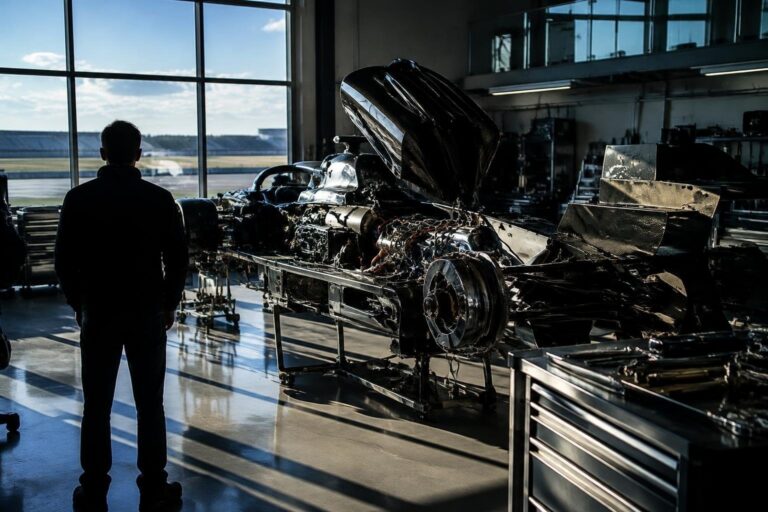
At the United States Grand Prix press conference, Adrian Newey – the architect behind Aston Martin’s 2026 Formula 1 car – delivered a measured yet frank appraisal of the partnership with Honda. While the Japanese power-train supplier has been hampered by early-season vibration and reliability glitches, Newey underscored that the team is beginning to feel a “buzz” inside the Silverstone factory as upgrades start to click.
Honda’s progress and lingering disappointment
Newey acknowledged that the first half of the season left Honda “a little bit disappointed” with the pace it managed to extract from its power unit. The Japanese firm entered 2026 with a brand-new set of regulations, and the initial package suffered from severe vibration that cost valuable track time.
Recent aerodynamic updates and a fresh map of the power unit have nudged Aston Martin out of the very bottom of the constructors’ championship, lifting the team to tenth place – just ahead of newcomers Cadillac.
Despite the marginal gain, Newey was clear that the deficit remains “fairly clear”.
He stopped short of blaming either the chassis or the engine exclusively, noting that the Additional Development and Upgrade Opportunities (ADUO) metric reflects only a slice of the overall performance picture. “If people look at the GPS data, they’ll see a more complete story,” he said, hinting that the combination of chassis dynamics and engine output still needs harmonisation.
Senior exec meeting in Japan and internal dynamics
Rumours swirled after the Singapore Grand Prix that Aston Martin owner Lawrence Stroll had flown to Japan for a private discussion with Honda. Newey confirmed the meeting was part of a pre-scheduled senior-executive dialogue that takes place every two to three months. “The rest of us, including myself, joined online,” he clarified, reinforcing that the conversation was routine rather than a crisis-driven summit.
Inside the team, Newey observed a noticeable shift in morale. Engineers are staying later, exchanging ideas across departments, and the factory atmosphere feels “charged”. He praised Honda’s engineering pedigree, reminding listeners of the historic collaboration that powered Red Bull to four world titles after Honda’s 2019 return. “They are a great company; I have every confidence they will accelerate quickly,” Newey asserted, drawing a parallel between the current rebuilding phase and the earlier Red Bull partnership.
Looking ahead to 2027: expectations and development windows
When asked about the upcoming 2027 season, Newey spoke of “a lot of energy and projects” already in motion at Honda. While he declined to disclose specific performance targets, he indicated that the Power Unit Advisory Committee (PUAC) could permit further upgrades before the season’s midpoint, potentially delivering a “race-eight”-level engine. The chief designer stressed that progress will not be instantaneous, but the combined effort of both organisations is set to close the gap to the front-running teams.
Newey also highlighted the recent chassis overhaul introduced at the Hungarian Grand Prix, which helped Fernando Alonso secure a point-scoring eighth place in Bahrain. These aerodynamic gains, he suggested, demonstrate that the chassis side of the equation is finally catching up, allowing the power unit’s shortcomings to become the primary focus.
Newey painted a picture of a partnership at a crossroads: Honda’s power unit lags behind the benchmark set by its 2019 Red Bull collaboration, yet the shared resolve, technical talent, and upcoming development windows give the Aston Martin camp a realistic pathway toward competitiveness in 2027.
