

Labour has withdrawn funding for two flagship road improvements, prompting angry responses from politicians, commuters and local firms who fear rising congestion and lost growth opportunities.
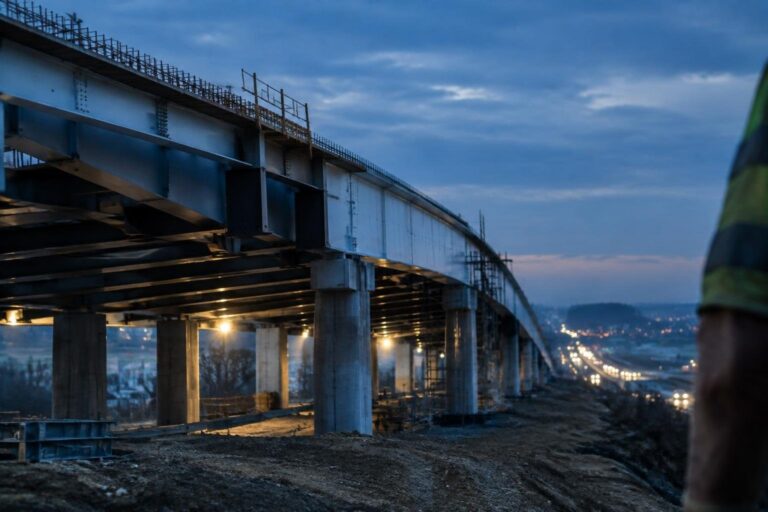
The Department for Transport announced that two high-profile schemes – the A31 Farnham Corridor and the A127 Economic Growth Corridor – will no longer be part of the Major Road Network. Both projects were intended to ease bottlenecks, improve safety and support new housing and employment sites in the south of England.
The decision came after a review of the government’s fiscal position, with officials citing the need to prioritise “good value for money” initiatives.
Under the previous Conservative administration, both corridors were earmarked for substantial upgrades. The A31 plan aimed to straighten dangerous bends and add capacity through the Farnham area, while the A127 proposal included an extra eastbound lane, a re-configuration of the Fortune of War junction near Laindon, and a suite of walking, cycling and bus-only facilities.
By the time of the withdrawal, roughly £2.34 million had already been spent on design and preparatory work, a figure now written off.
Political fallout and official reactions
Shadow Transport Secretary Richard Holden lambasted the move as evidence of a “war on motorists”.
He argued that diverting road-budget resources to welfare programmes penalises the drivers and freight operators who underpin economic growth. “Labour are killing dozens of major improvement schemes at a time when investment should be flowing into our roads,” he said.
Surrey County Council leader Tim Oliver called the abandonment “deeply frustrating”, insisting that safety concerns along the A31 have not vanished. “The case for action remains clear – the communities along the corridor still need better infrastructure,” he added.
Essex County Council’s Reform leader, Peter Harris described the decision as a “disaster” for the region. He highlighted the A127’s role as a vital artery linking London to Southend-on-Sea, noting that traffic volumes exceed 80,000 vehicles per day and that congestion and accident rates are already high. “Without further investment the junctions will overflow,” Harris warned, urging the DfT to reopen dialogue.
Business impact and local concerns
Local firms quickly voiced alarm. Freedom Leisure’s office manager Jody Mears said the A127 is “the heartbeat of our company”, likening its importance to that of the A12 and A13. She explained that frequent stoppages on the dual carriageway force the company to add “traffic permitting” clauses to customer orders, eroding reliability.
Freight operator Charlie Mann of Alpi UK echoed the sentiment, describing the funding cut as “crazy”. He stressed that delayed unloadings translate directly into lost revenue: “The quicker we get unloaded, the quicker they get back… it’s all time, and because of time, it’s money.”
The DfT defended its stance, emphasizing a record £7.3 billion allocation for local road repairs and pothole fixes, alongside over £1 billion earmarked for 16 other major road schemes deemed to deliver the greatest benefit to taxpayers. Yet critics argue that excluding the A31 and A127 undermines longer-term growth strategies and places disproportionate strain on existing infrastructure.
