Britain’s dubious culinary legacy meets Covid‑era loan turmoil, leaving eateries in a precarious bind.
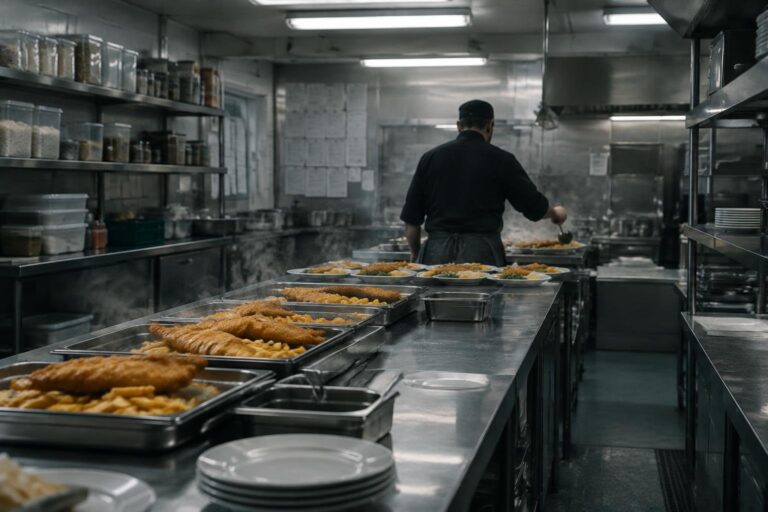
When the French gastronome Grimod de La Reynière sneered at England in 1806, calling its fare nothing more than “boiled chickens,” he unwittingly set a tone that would echo for two centuries. Today, dishes such as fish and chips, the full English breakfast, and the Sunday roast still dominate public imagination, reinforcing a stereotype of heavy, unrefined cooking.
The persistence of this image is not merely cultural trivia; it intertwines with the nation’s nutritional profile, where ultraprocessed products exceed fifty percent of daily caloric intake and obesity rates remain above the EU average.
Lewis Bassett chef-author of The Full English: The Ways We Eat and Why investigates how historical forces forged this culinary landscape.
His narrative moves from a North London sourdough bakery to a Birmingham balti house, illustrating that what is labeled “English” food is, in fact, a mosaic of immigrant influences, industrial-era necessities, and class-driven aspirations. Bassett argues that industrialisation accelerated urban migration, stripped many households of home-baking traditions, and pushed mass-produced bread and meat onto the table, a pattern that still shapes contemporary consumption.
The legacy of industrial food and its modern echo
Industrial England’s rapid urbanisation in the nineteenth century meant that the majority of people bought bread rather than kneaded it. Land consolidation had already eroded the peasant class, leaving a workforce dependent on factory-produced staples. This shift gave rise to hearty, carbohydrate-rich meals that could sustain long labour hours, cementing the reputation of British cuisine as “brutish mounds of meat and carbs.” Yet the same period also opened global trade routes, introducing spices, curries, and other foreign flavours that would later be absorbed into the national palate.
Today, the narrative of British food is paradoxical. On one hand, the rise of artisan bakeries and farm-to-table concepts suggests a rebellion against industrial uniformity. On the other, the sheer dominance of ultraprocessed food underscores how the legacy of mass production remains entrenched. Bassett’s exploration shows that the current fascination with handcrafted dishes is, in part, a reaction to the very standardisation that industrialisation imposed.
Pandemic relief turned long-term burden for independent eateries
When COVID-19 shuttered dining rooms worldwide, the United States introduced the Economic Injury Disaster Loan (EIDL) program under the CARES Act. Offered at a 3.75% interest rate with a 30-month deferment, the loans initially appeared as a lifeline for struggling restaurateurs. Jai Mazumdar, owner of Spice N Curry in Miami, accepted a $370,000 loan in early 2021, followed by an additional $87,000 the next year, hoping that post-pandemic traffic from nearby Florida International University would revive his business.
Instead, remote learning and a lingering drop in foot traffic crippled his lunch-hour revenue. With payments of $1,900 per month and a personal mortgage of $1,600, Mazumdar was forced to rent a room in his home to stay afloat. Similar stories echo across the country; Randy Barnette of Virginia’s Ornery Beer Company secured a $500,000 EIDL in February 2021, only to see expansion plans stall, forcing him to downsize production and close the original venue.
A congressional report released in 2024 revealed that over 30% of the 3.9 million EIDLs—totaling $378.4 billion—had defaulted, creating $75.2 billion in charged-off debt. Borrowers who received more than $200,000 were required to provide a personal guarantee, exposing personal assets to seizure if repayments faltered. Once a loan becomes 120 days past due, the Treasury takes over collection, adding penalties that can raise the owed amount by roughly a third.
Why the lifeline became a sinkhole
The rapid approval process, praised for its speed, inadvertently lowered credit-worthiness standards. Small-business owners, many of whom already faced thin margins, accepted loans without fully assessing long-term cash-flow impacts. As inflation surged and labour, food, and energy costs rose, the anticipated rebound in diners failed to materialise. Consequently, independent eateries found themselves trapped between mounting operational expenses and debt obligations that now feel “a disaster of its own,” as Mazumdar describes.
Industry observers, such as Erika Polmar of the Independent Restaurant Coalition, note that the pandemic acted as an “extinction event” for tens of thousands of venues. Those that survived often did so by exhausting cash reserves, forgoing rent relief, or taking on multiple loans, leaving little room for reinvestment or growth. The combined weight of a tarnished culinary reputation and lingering financial strain paints a bleak picture for the sector’s recovery.
Understanding this dual crisis—historical perceptions of British food and the contemporary fallout from emergency financing—highlights how entrenched economic structures and cultural narratives can together dictate the fate of a nation’s dining tables.