Stars and designers treated the Met Gala as a gallery opening, interpreting the museum's dressed body themes with daring looks and art-driven accessories
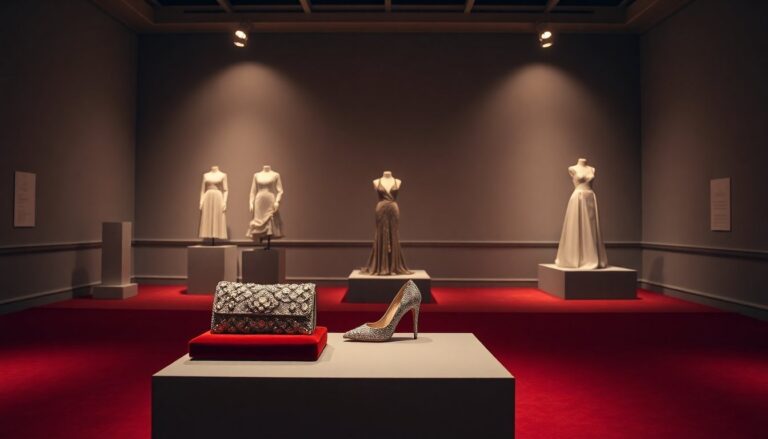
The Met Gala returned with a theme declaring Fashion is Art, and attendees answered with bold, museum-minded choices. The evening tied directly into the Costume Institute’s spring exhibition titled Costume Art, which explores depictions of the dressed body across several categories — notably the naked body, the classic body, the pregnant body and the ageing body.
Guests were urged to reference historical and contemporary representations of clothing-as-art, prompting designers and celebrities to treat garments like canvases and sculptures rather than merely elegant eveningwear.
The carpet itself was staged like a garden-gallery hybrid, with patches of grass creeping up stone steps, white wisteria draped overhead and terracotta planters of purple blooms flanking the entrance.
That set design reinforced the evening’s curatorial impulse: the carpet was not simply an arrival point but an extension of the museum installation, a public prologue to the exhibition housed inside the Metropolitan Museum of Art.
Standout looks: sculptural drama and literal canvases
Many celebrities embraced sculptural silhouettes and literal reinterpretations of the show’s themes. Beyoncé arrived in a custom Olivier Rousteing creation described as a sculptural skeleton dress with a feathered train and a diamond crown, presenting a regal, museum-worthy tableau together with Jay-Z and Blue Ivy. Naomi Osaka wore a dramatic Robert Wun sculptural gown — a white, fitted construction with exaggerated shoulders, red feather detailing and matching headpiece; her look echoed a piece already included in the museum’s exhibit and even featured hands dipped in dripping red paint as a performative detail. These outfits read like three-dimensional artworks that engaged both fashion technique and narrative gesture.
Simultaneously, other attendees turned cloth into painted imagery. Emma Chamberlain arrived in a hand-painted Mugler by Miguel Castro Freitas gown with a watercolor-like cascade that treated the wearer’s torso as a pictorial surface. Jessica Kayll took that idea further by physically painting a silk robe inspired by Monet’s water lilies, completing the brushwork shortly before the gala. Anne Hathaway’s Michael Kors Grecian strapless dress was hand-painted with a dove motif, translating iconography of peace into wearable art. Each of these looks emphasized that garment surfaces could host pictorial content as legitimately as a framed canvas.
Art-historical references and living portraits
Paintings and performance
Some guests explicitly referenced canonical art and historical narratives. Lena Dunham collaborated with Valentino to channel Artemisia Gentileschi’s dramatic renaissance scenes through a gown that reimagined the story of Judith and Holofernes as red feathered impact. Chloe Malle wore a Colleen Allen apricot dress inspired by Frederic Leighton’s Flaming June, while Lauren Sánchez Bezos cited John Singer Sargent’s Madame X as the touchstone for her Schiaparelli gown. These choices turned the red carpet into an interpretive space where costume met art history, and designers operated as translators between eras.
Self-portraiture and museum crossover
Other attendees blurred the distinction further by referencing portraits and self-representation. Venus Williams honored a painted portrait of herself with a sparkling black gown and an elaborate neckpiece, while Amy Sherald — whose work inspired multiple looks — collaborated with Thom Browne on an ensemble that nodded to her own distinctive palette and forms. Gwendoline Christie used a mask that echoed her face, literally layering representation atop representation. These moments read as playful self-portraiture, as if the celebrities were stepping out of the frames that ordinarily hold painted sitters.
Context, controversy and how to watch
The Met’s decision to frame fashion within its galleries has not always been uncontested. Art historian Nancy Hall-Duncan notes that the boundary between high art and fashion has shifted over time: 19th-century critics often dismissed fashion as frivolous, and when Yves Saint Laurent’s major Met exhibition opened in 1983, it drew heavy criticism. Today, however, exhibitions like Costume Art and recent shows such as the Louvre’s “Louvre couture” signal institutional acceptance. The evening’s co-chairs, including Anna Wintour and curator Andrew Bolton, used the gala to underscore that acceptance; their dress code functions as a public endorsement that fashion deserves serious curatorial attention.
For those who could not attend, the event was available via livestream: Vogue hosted the official broadcast with personalities such as Ashley Graham, La La Anthony and Cara Delevingne, while Emma Chamberlain conducted interviews on the carpet. The Associated Press streamed arrivals from nearby hotels earlier in the day, giving viewers a preview of the looks as guests traveled to the museum. In this way the Met Gala continued to operate as both a private fundraiser and a broadly accessible cultural moment, inviting the public to witness how fashion and art intersect on a single, high-profile night.