

Discover how traditions survive like living organisms, from monastic chants to youth festivals and community art initiatives.
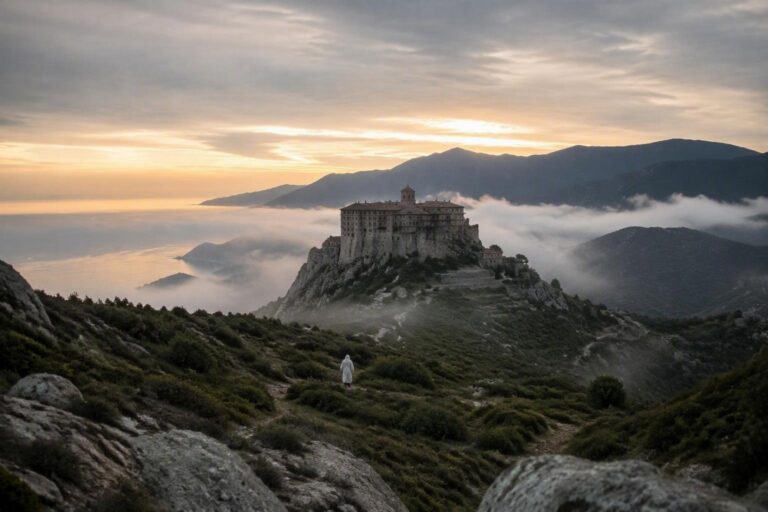
When a monk on Mount Athos rises before sunrise to repeat a hymn passed down since the 10th-century monk Athanasios, the scene looks like a timeless relic. Yet that daily ritual is a vivid illustration of a deeper truth: cultural practices act like living organisms, constantly reproducing, adapting, and spreading across generations.
Scientists studying biology agree that the essence of life lies in the storage, processing and transmission of information. In organisms this job belongs to DNA. In human societies, a parallel system of information travels through stories, songs, rituals and customs, a process we call culture.
This parallel stream emerged millions of years ago and has since diversified into the astonishingly complex tapestry of modern life.
Culture behaves like a living system
Just as genes encode the instructions for a living body, cultural knowledge encodes the instructions for a community.
The monk’s chant, the chimpanzees that use rocks to crack nuts, and the first humans who learned to control fire all demonstrate that learning from others can outpace biological evolution. When a useful practice appears—whether a stone-tool design or a cooking method—its adoption spreads through observation, imitation, and, crucially, language.
Information as the lifeblood of culture
Language turned cultural transmission into a high-speed network. Once a simple set of sounds could be linked to precise meanings, entire bodies of knowledge could be taught in a single conversation rather than through slow trial-and-error. The result was an accelerating feedback loop: larger brains improved learning capacity, which allowed more complex language, which in turn carried richer cultural packages. This loop has driven the human species from hunter-gatherer bands to the creators of spacecraft.
Youth steering heritage in South Africa
On Heritage Day at the Msunduzi Museum in Pietermaritzburg, a group of high-school students gathered to debate whether “traditional culture versus modern culture” better safeguards identity. The event, organized by the Nomkhubulwane Culture and Youth Development Organisation, paired lively presentations of Tsonga dance, Basotho customs, Indian festivals and Zulu traditions with an open discussion on how contemporary trends reshape those practices.
Debate on tradition versus modernity
Students such as Koketso Marema and Tymaika Samayiyi demonstrated the vibrancy of their own heritages while listening to peers question the relevance of age-old rituals in a digital age. Facilitator Andiswa Ngcobo emphasized that exposure to multiple cultural streams nurtures a “rainbow nation” mindset, helping young people anchor their personal identity while appreciating the mosaic of South African society.
Community artists keep traditions vibrant in the Bay Area
The Culture Keepers initiative maps a similar principle onto the artistic landscape of Northern California. By linking local creators—muralists, musicians, writers—to museums, NGOs and private donors, the program ensures that the works of historically under-represented groups, especially Black and Indigenous voices, receive the resources needed to flourish.
Building bridges through patronage
Curator Vanessa Camarena-Arredondo notes that many assume culture will survive on its own; the reality is that sustained funding, safe exhibition spaces and public awareness are essential. Thanks to philanthropists such as Jacob Pritzker and partnerships with venues like the Urban Peace Movement, artists like Oakland-born Timothy B. can turn personal memory into public art that both honors ancestry and imagines future possibilities.
From a monk’s centuries-old chant to a classroom debate and a bustling mural project, the thread is clear: culture persists when people actively nurture its information pathways. Whether through language, ritual or creative collaboration, each generation rewrites the code that keeps tradition alive, proving that cultural life is as real—and as vital—as any biological organism.
