Chelsea and Leeds meet at Wembley with formlines, managerial change and fan logistics all in focus — live match events and stadium advice inside
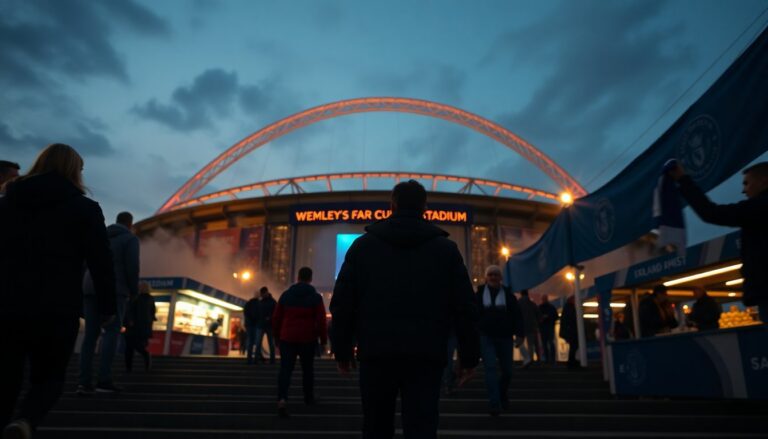
Two clubs met at Wembley with a place in the FA Cup final at stake as Chelsea faced Leeds United. The tie carried extra spice: the winner would meet Manchester City, who had narrowly overcome Southampton the day before. This match was staged on Sunday at Wembley, following the stadium’s semi-final weekend schedule that included Manchester City v Southampton on Saturday 25 April 2026 and Chelsea v Leeds on Sunday 26 April 2026.
The local context — club form, a recent managerial change at Chelsea and Leeds’ run of results — framed how both teams approached the contest.
The on-field story finished with Chelsea 1-0 Leeds, but the finer details shaped the narrative: tactical shifts, late substitutions and stoppage-time tension.
This article summarises the match moments, explains the background to both squads and provides practical guidance for supporters attending Wembley. Throughout the piece, key terms and important match events are highlighted to help readers quickly identify the defining elements of the day.
Match narrative and decisive moments
The game was settled by a single goal and featured moments of tension in the closing stages. Chelsea maintained a slender lead as Leeds pushed strongly for an equaliser, producing late set-piece opportunities and substitutions aimed at finding a breakthrough. A series of fouls and bookings increased the physicality of the final phase: Ampadu and Nmecha picked up cautions, while an accidental collision between Santos and Nmecha required a brief stoppage. One incident involving a clash of knees left Caicedo needing treatment, which extended added time and intensified the dramatic finish.
Final stages and substitutions
In the closing minutes, Leeds introduced Longstaff from the bench in an attempt to force parity; his set-piece deliveries were among the final threats. Chelsea reacted by running down the clock with a late substitution, bringing on Delap for Joao Pedro during stoppage time to manage possession and take the game to the final whistle. A VAR check cleared an incident involving Nmecha, and a few nervy moments at the back post tested the resilience of Chelsea’s defence. Ultimately, Chelsea held on to secure progression to the final.
Team form, managerial context and tactical outlook
Chelsea entered the tie amid turbulence: they had suffered seven defeats in eight games and made a coaching change earlier in the week when Liam Rosenior was relieved of his duties. Interim manager Calum McFarlane oversaw his second short-term spell as stand-in head coach, meaning this semi presented his second managerial debut of the season. Leeds, by contrast, arrived on a high: unbeaten in seven and buoyed by recent wins over Manchester United and Wolves. Their run had taken them to the FA Cup semi-finals for the first time since 1987 and put them in position to reach a final for the first time since finishing runners-up in 1973.
Tactical tendencies
Both teams adjusted personnel and shape to reflect recent form. Chelsea sought to balance their need for defensive solidity with moments of attacking intent from wide areas, while Leeds looked to use momentum and energetic pressing to create openings. Set pieces and late substitutions proved decisive in the contest: the ability to manage stoppage time, maintain composure and exploit set-piece situations determined the outcome more than sustained periods of dominance.
Wembley logistics, safety and fan information
Supporters attending the semi-finals were advised to arrive early: for the Chelsea v Leeds fixture general admission doors opened at 13:00 and hospitality doors at 12:00. Fan Zones opened four hours before kick-off — Chelsea’s on the East concourse from 11:00 and Leeds’ on the West (Arena Square) from 11:00 — and offered food, drink and entertainment until 30 minutes before kick-off. The stadium emphasised that anyone without a valid ticket should not travel, as entry is strictly by ticket only and additional ticket checks were in place around the venue.
Wembley operated a strict bag policy: only one small bag per person no larger than A4 dimensions (Height 297mm x Width 210mm x Depth 210mm) was permitted. The venue is a cashless stadium and prohibited street drinking under a local Public Spaces Protection Order on Olympic Way; fans were instructed to use licensed bars and the dedicated fan zones. From 22 March 2026 onwards, the Unauthorised Entry to Football Matches Act made attempts to enter without a valid ticket an arrestable offence, with penalties including fines and potential Football Banning Orders. Transport guidance recommended arriving at stations at least one hour before kick-off to allow time for walking and security checks, and accessibility services — including 310 wheelchair spaces, sensory rooms and shuttle options — were available for supporters with additional needs.
Parking had to be booked in advance through the official channels, while National Express remained the stadium’s coach partner with drop-off points and nationwide connections. Stewards and the customer engagement team were on hand across levels 1, 2 and 5 to assist with access queries. In short, both the sporting drama and practical arrangements combined to make the Wembley semi-finals a high-stakes, well-managed event for players and fans alike.