The King and Queen begin a four-day state visit to the United States on 27th Apr 2026 with the aim of renewing the special relationship and addressing security and political tensions
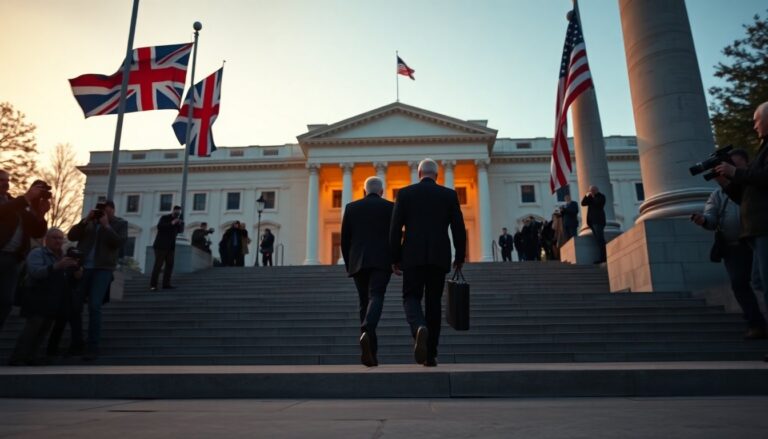
The arrival of the King and Queen in Washington marks the start of a four-day state visit that carries both ceremonial weight and diplomatic urgency. Published 27th Apr 2026, this visit comes at a moment when the long-standing ties between the UK and the US face friction over policy differences such as the UK’s response to the conflict in Iran and the implementation of a digital services levy on US tech firms.
The visit will include meetings in Washington DC, New York and Virginia and is intended to showcase the deeper bonds beyond any single administration.
Behind the pageantry lies a carefully choreographed programme: a tea at the White House, a speech to Congress, a stop at the 9/11 Memorial and a wreath-laying in Virginia to honour fallen service personnel.
The King and Queen also privately reached out to President Trump and the First Lady after a gunman attempted to charge an event in Washington attended by the president, an incident that added a heightened note of concern about political violence on both sides of the Atlantic.
Buckingham Palace said the royal household was relieved that those present were unharmed.
What the visit is trying to achieve
The official line from the UK ambassador frames the trip as an effort to renew and revitalise an important partnership. Diplomats emphasize three strategic priorities: boosting investment, deepening military cooperation and expanding people-to-people links such as tourism and education. These goals reflect a recognition that state relationships extend beyond disagreements between governments; they rely on shared institutions, trade ties and cultural connections. The presence of the monarchy, widely viewed as the UK’s principal soft-power instrument, is intended to reinforce those broader threads of connection.
Political frictions and public diplomacy
Relations have been strained publicly: President Trump has criticised Sir Keir Starmer over the UK’s posture on Iran and has threatened tariffs if the UK’s digital services levy is not withdrawn. There have even been reports that the US is reviewing its stance on the Falkland Islands. Against that backdrop, the King’s speech to Congress is a high-stakes moment: it must underline mutual commitments to NATO and trade while avoiding direct intervention in disputes between London and Washington.
Speech to Congress
The speech will be the first by a British monarch to address Congress since Queen Elizabeth II in 1991, so it carries symbolic weight as well as policy influence. Officials will be looking for language that stresses shared values and historical ties while carefully navigating contemporary political fault lines. The monarch’s role is to embody continuity and to remind both publics that the partnership serves wider security and economic purposes rather than the transient views of any one political leader.
Public and political reactions
Not everyone welcomes the trip: critics in the UK urged cancellation and some US commentators noted domestic political sensitivities. Yet supporters argue that royal diplomacy can soften rhetoric and create space for practical cooperation—especially when traditional diplomatic channels are under strain. The visit is therefore both a charm offensive and a strategic play to remind leaders and publics of the advantages of close Anglo-American collaboration.
Security concerns and difficult conversations
The weekend shooting incident in Washington cast a shadow over the visit and prompted private messages of sympathy from the King and Queen to the Trumps. After security consultations, organisers decided the programme would proceed with modest adjustments to minimise risks. The incident also underscores a wider anxiety about rising political violence in democratic societies and has sharpened the focus on protective arrangements for high-profile events.
Epstein-related calls for engagement
Alongside statecraft, sensitive issues expected to surface include requests from survivors connected to the Epstein scandal. Members of Congress and survivors have urged the monarch to acknowledge their concerns and, where possible, offer symbolic gestures of recognition. The individual at the centre of those claims, styled as Mountbatten-Windsor, reached an out-of-court settlement in 2026 that contained no admission of liability. Any engagement will require careful handling to balance support for survivors with ongoing legal and investigative complexities.
In the end, the visit is a test of soft power and careful diplomacy: it aims to remind both capitals that despite sharp disagreements, the bilateral relationship retains deep roots. If the King’s presence can calm tensions, sustain cooperation on defence and trade, and respectfully address public concerns, the trip will have achieved more than ceremonial success. Whether that proves possible will be watched closely in the coming days by politicians, diplomats and the public on both sides of the Atlantic.