

A tragic train collision near Bedford has left nine individuals in critical condition and resulted in the death of a train driver.
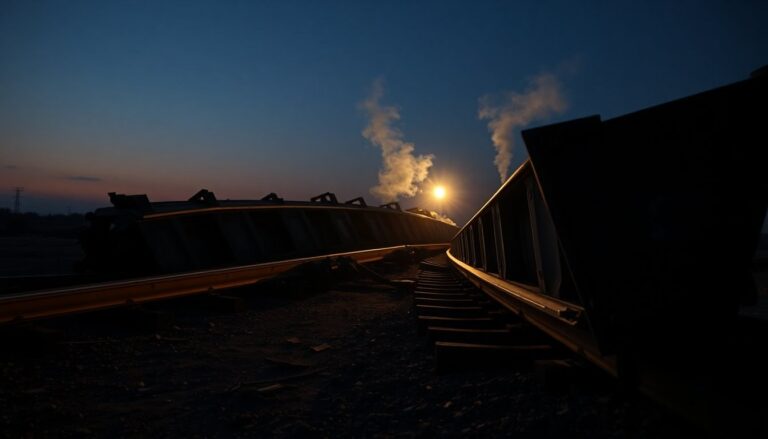
The Bedford area was struck by a devastating train collision on Friday evening, leaving a trail of injuries and one fatality. The incident involved two East Midlands Railway (EMR) services, one departing from Corby and the other from Nottingham, both bound for London St Pancras.
The collision, which occurred just south of Elstow, has raised numerous questions about the safety and operations of the UK’s railway network.
The aftermath of the crash has been profound, with emergency services working tirelessly to attend to the injured.
As of Saturday morning, nine people remain in a critical condition, with a total of 28 individuals still hospitalized. The incident has disrupted travel plans for many, with EMR services suspended over the weekend and alternative routes advised for passengers.
The Impact of the Collision
The collision has had a significant impact on both the local community and the wider railway network. The British Transport Police (BTP) declared a major incident shortly after the crash, with Chief Constable Lucy D’Orsi praising the response from emergency services and local people. The incident has also drawn attention from political figures, with Transport Secretary Heidi Alexander expressing her deep concern and Prime Minister Sir Keir Starmer offering his condolences.
The exact cause of the collision remains unclear, with investigations ongoing. The Rail Accident Investigation Branch (RAIB) is working alongside the BTP to gather facts and determine what happened. The UK’s railways are known for their safety, but this incident has raised questions about the measures in place to prevent such tragedies.
Passenger Accounts and Emergency Response
Passengers on board the trains have shared harrowing accounts of the collision. Dr. Peter Knapp described the scene as akin to a bomb explosion, with bloodied faces and broken bones. Shola Mene recounted hearing a big bang and seeing people flown from their seats. These testimonies highlight the severity of the incident and the immediate need for medical attention.
The emergency response was swift and comprehensive. Multiple air ambulance helicopters, road vehicles, and some 70 firefighters were involved in the immediate aftermath. The East of England Ambulance Service confirmed that 11 people sustained very serious injuries, with a further 32 seriously injured and 57 having minor injuries. The ambulance service transferred 64 patients to hospital, with some treated at the scene.
The Aftermath and Ongoing Investigations
The aftermath of the collision has been marked by a sense of shock and sadness. The driver’s family, friends, and colleagues have been left to grapple with the loss. The RMT general secretary Eddie Dempsey expressed the union’s devastation at the news, highlighting the driver’s role as a former RMT rep.
As investigations continue, the focus remains on understanding the cause of the collision and ensuring that lessons are learned. The BTP’s Chief Constable D’Orsi stressed the importance of refraining from speculation and allowing the specialist investigators to gather the facts. The disruption to travel services has been significant, with EMR advising passengers to use alternative routes and offering flexibility with tickets.
The Bedford train collision serves as a stark reminder of the importance of railway safety and the need for continuous improvement in the measures in place to protect passengers and staff. As the investigations unfold, the hope is that the lessons learned will contribute to preventing such tragedies in the future.
