

US Central Command says its Hormuz blockade works, while destroyers launch the first mine‑clearing run since the war began.
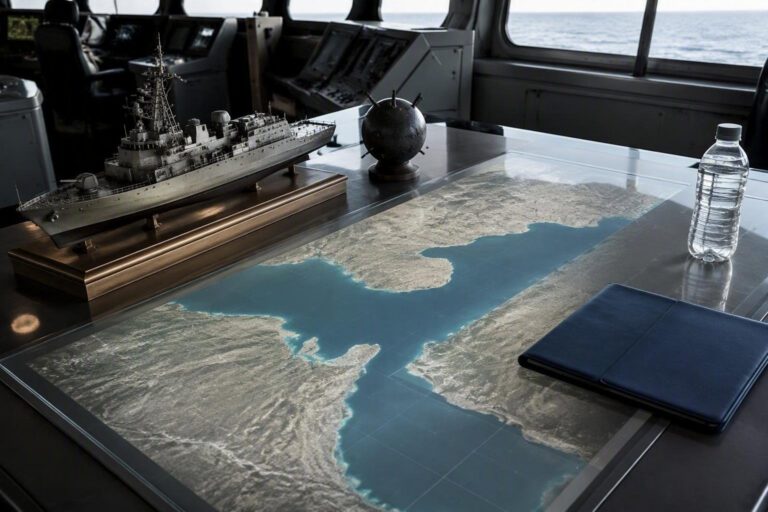
The United States has announced that its ongoing pressure campaign on the Strait of Hormuz is producing tangible results. In a briefing on 17 September 2026, Captain Tim Hawkins of US Central Command told Al Jazeera that the blockade is “highly effective” and that commercial traffic continues to flow, with roughly 900 million barrels of oil having transited the waterway since May.
Hawkins emphasized that Iran does not control the strait, framing the operation as a legitimate effort to safeguard international commerce. The statement also served to reassure global markets that, despite heightened tensions, the essential flow of energy supplies remains largely uninterrupted.
US Navy launches its first mine-clearing sortie since the conflict began
Two guided-missile destroyers sail through the corridor
On 11, two U.S. Navy destroyers – the USS Frank E. Peterson (DDG 121) and the USS Michael Murphy (DDG 112) – entered the Strait of Hormuz and conducted operations in the Arabian Gulf.
According to CENTCOM, the mission’s primary goal was to verify that the channel is free of sea mines allegedly laid by Iran’s Islamic Revolutionary Guard Corps.
The transit marked the first such movement of U.S. warships through the chokepoint since hostilities escalated earlier in the year. In addition to the destroyers, underwater drones are slated to join the effort in the coming days, expanding the mine-clearing capability and accelerating the establishment of a secure maritime passage.
Official comments from senior U.S. leaders
Admiral Brad Cooper, commander of United States Central Command, declared, “Today, we began the process of establishing a new passage and we will share this safe pathway with the maritime industry soon to encourage the free flow of commerce.” Defense Secretary Pete Hegseth echoed the sentiment on X, confirming the destroyers’ movement and underscoring the broader objective of guaranteeing a clear and safe route for international shipping.
The combined statements highlight a coordinated strategy: while the blockade pressures Iran economically, the parallel mine-clearing operation aims to reassure commercial vessels that a viable, protected corridor will be available shortly.
Iran rejects U.S. claims and asserts its authority
Iran’s joint military command, speaking through state broadcaster IRIB, rejected the U.S. narrative that its warships had freely navigated the strait. The Iranian spokesperson asserted that any vessel’s movement remains subject to the “armed forces of the Islamic Republic of Iran,” effectively denying the American account of an unhindered transit.
Tehran’s denial underscores the broader information battle surrounding the Hormuz crisis. While Washington presents the operations as a step toward de-escalation and the restoration of free trade, Tehran frames them as provocative incursions that undermine its sovereign control over a strategic waterway.
Both sides continue to leverage media statements to shape international perception, with the United States emphasizing the humanitarian and commercial benefits of a cleared passage, and Iran emphasizing its right to defend national interests against perceived aggression.
