

Exploring the Dynamics of Venezuela's Interim Government: Strategies for Economic Stabilization Amidst US Oversight Gain insights into the complex landscape of Venezuela's interim government as it navigates efforts to stabilize the economy under the watchful eye of US scrutiny. This analysis delves into the political maneuvers, economic policies, and international relations shaping the current situation, highlighting key challenges and potential pathways to recovery.
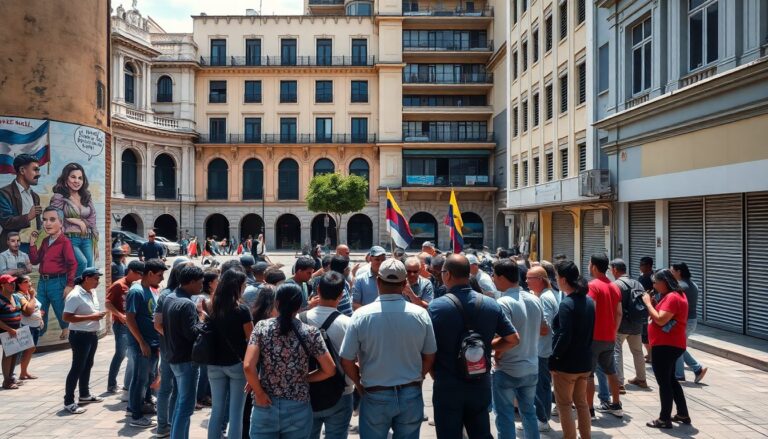
In the aftermath of recent political upheaval, Venezuela is grappling with the consequences of a US military operation that resulted in the capture of its long-time leader, Nicolás Maduro. This operation, known as Operation Absolute Resolve, has triggered significant transformations within the Venezuelan political landscape.
The interim government, led by Delcy Rodriguez, is working to stabilize its economy under strict US oversight.
Following the transfer of millions of barrels of crude oil to the United States, Venezuela’s interim government has secured approximately $500 million from its first oil sale under a newly brokered agreement with US authorities.
This deal is critical for a nation struggling economically; however, the funds are not directly accessible to the government. Instead, they are placed in a restricted account in Qatar, requiring US approval before they can be allocated for public sector salaries and essential services.
Political dynamics and key figures
The political landscape in Venezuela is defined by a civic-military alliance that retains substantial influence. While Delcy Rodriguez officially holds the title of interim president, analysts suggest that true power resides within a coalition of influential figures rather than a single leader. As the country navigates this new regime, understanding the roles of these key players is essential.
Key individuals in the interim government
Rodriguez’s brother, Jorge Rodriguez, serves as the head of the National Assembly and has been instrumental in advancing new energy reforms aimed at attracting foreign investment. His control over legislative processes allows him to effectively shape the government’s policies. Meanwhile, Diosdado Cabello, the Interior Minister, represents the hardline faction of Chavismo and faces immense pressure from both domestic and international authorities.
Additionally, Vladimir Padrino, the Defence Minister, has maintained military stability, holding his position for over a decade despite ongoing challenges. The interplay among these individuals creates a complex governance structure that significantly influences Venezuela’s future.
Economic survival strategies
The survival of Venezuela’s economy hinges on its vast oil reserves, estimated at around 303 billion barrels, the largest in the world. Oil remains the primary revenue source, yet the current economic framework is tightly controlled by US regulations. Funds from oil sales do not directly reach the Venezuelan government; instead, they are funneled through US-supervised channels to mitigate risks associated with Venezuela’s substantial external debt.
Distribution of oil revenue
Under this arrangement, the Venezuelan government submits budget requests detailing how the funds will be used, including payments for essential services such as education and healthcare. This oversight has raised concerns among experts, who argue that it effectively places Venezuela under US economic tutelage, stripping the government of its financial autonomy. Critics contend that this arrangement may not lead to a sustainable recovery for the nation.
As the interim government strives to manage these constraints, it also seeks to diversify its revenue sources. While primarily reliant on oil, Venezuela possesses significant gold reserves estimated at approximately 161.2 metric tonnes. However, much of the gold production occurs through informal and sometimes illegal channels, complicating efforts to stabilize the economy further.
Humanitarian crises and governance challenges
The humanitarian situation in Venezuela remains critical, with over 7.9 million people in need of urgent assistance. A significant portion of the population lives in extreme poverty, struggling with inadequate wages that fail to cover basic needs. This has led to widespread discontent among citizens, who express frustration over the government’s inability to address their pressing challenges.
For example, locals like Zulma Clavo from Petare describe their harsh realities, where even the combined incomes of family members are insufficient to meet essential expenses. As Venezuela’s economic conditions continue to deteriorate, the interim government faces immense pressure to implement effective solutions and regain public trust.
Following the transfer of millions of barrels of crude oil to the United States, Venezuela’s interim government has secured approximately $500 million from its first oil sale under a newly brokered agreement with US authorities. This deal is critical for a nation struggling economically; however, the funds are not directly accessible to the government. Instead, they are placed in a restricted account in Qatar, requiring US approval before they can be allocated for public sector salaries and essential services.0
