

Buell’s Super Cruiser captures Rider’s 2026 Motorcycle of the Year, marrying classic cruiser styling with superbike power.
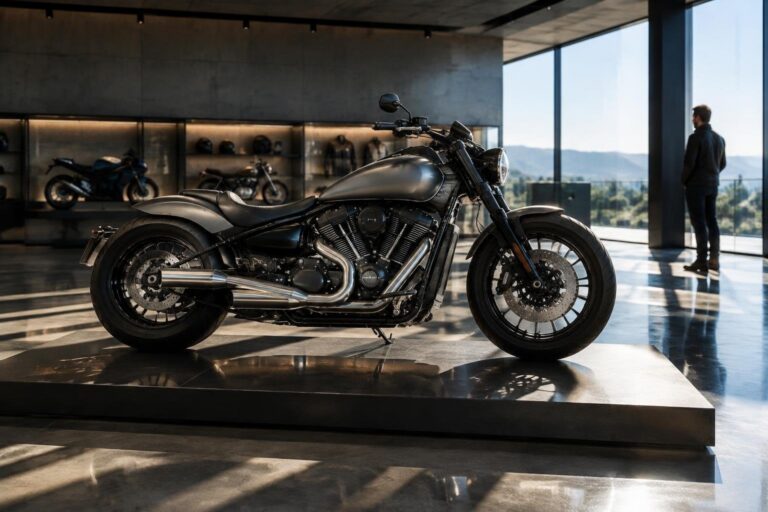
The latest edition of Rider Magazine has announced its 2026 Motorcycle of the Year, and the winner is none other than the Buell Super Cruiser. This accolade, bestowed for the 36th consecutive year, is reserved for a bike that does more than deliver raw performance; it must signal a meaningful direction for the future of motorcycling.
Buell’s entry accomplishes that by fusing the unmistakable silhouette of an American cruiser with the aggressive dynamics of a modern superbike, creating a hybrid that feels both familiar and revolutionary.
Rider’s editorial board evaluates candidates against criteria that go beyond horsepower charts.
The publication looks for innovations in chassis geometry, suspension philosophy, powertrain integration, and the broader cultural impact of the machine. Last year’s award went to the three-wheeled Can-Am Canyon Redrock, praised for expanding the rider demographic. This year’s selection, however, does not rely on exotic electronics or an electric drivetrain.
Instead, it proves that re-thinking traditional layouts can be just as forward-looking.
What sets the Super Cruiser apart
At first glance, the bike wears the visual language of a classic Harley-Davidson FXR: a low-slung stance, a triangular under-seat frame, and a tight relationship between tank, seat, and engine. Yet underneath those familiar lines lies a 1,190 cc liquid-cooled V-twin that churns out a claimed 175 horsepower and 94 lb-ft of torque. The powerplant is borrowed from Buell’s high-performance sportbike family, but it has been retuned for a broader torque curve that still satisfies the craving for top-end excitement.
The chassis is a brand-new steel-tube frame designed by Roland Sands Design. Rather than shoving a massive engine into a dated cruiser skeleton, Sands crafted a lightweight lattice that weighs under 500 lb. This reduced mass, combined with a 6-inch-wide rear wheel, FOX suspension, and dual 320 mm Brembo front rotors clamped by four-piston monoblock calipers, gives the Super Cruiser a lean angle of 50 degrees—figures more commonly seen on pure sport machines. The result is a motorcycle that can turn, brake, and accelerate with a sense of urgency rarely associated with the cruiser segment.
How Buell reshaped the cruiser archetype
Traditionally, cruisers prioritize low-end torque, relaxed ergonomics, and a long wheelbase that favors straight-line stability. Conversely, superbikes are built around aggressive geometry, high-revving engines, and rapid directional changes. The Super Cruiser refuses to choose; it marries the two philosophies. Its 17-inch wheels are paired with a suspension setup that provides ample travel for comfort while maintaining the firm feedback required for spirited cornering. The Brembo braking system, typically reserved for performance bikes, eliminates the brake-fade worries that have haunted many heavyweight cruisers.
Beyond the hardware, the bike’s identity speaks to the legacy of Erik Buell, whose career was defined by challenging conventions. While the original Buell models often sparked debate, they also introduced engineering concepts that later became industry standards. The Super Cruiser continues that tradition by questioning the assumption that cruiser and superbike components must remain in separate silos. By placing a high-output V-twin in a chassis that behaves like a sportbike, Buell creates a new sub-category that some are already dubbing the “performance cruiser.”
Rider’s editorial team emphasizes that the award is not about being the loudest or the most technologically laden. It is about shaping the conversation of where motorcycling is headed. In this sense, the Super Cruiser’s blend of nostalgic aesthetics and cutting-edge dynamics offers a blueprint for future designs: respect the past, but do not be confined by it. Whether that means more manufacturers will experiment with mixed-segment machines remains to be seen, but the Super Cruiser has certainly turned heads at every test ride and showroom.
Reception and market outlook
Early responses from riders and journalists highlight the bike’s surprising agility. Test riders report 0-60 mph times that rival many entry-level sportbikes, while still delivering a comfortable upright riding position for longer journeys. The price point, positioned below many high-end superbikes, makes the Super Cruiser an attractive proposition for riders who crave performance without sacrificing classic cruiser presence.
As the motorcycle industry grapples with electrification and shifting consumer preferences, the Super Cruiser demonstrates that there is still room for innovation within the internal-combustion arena. Its success may inspire other manufacturers to revisit legacy styling cues and fuse them with modern engineering, thereby enriching the market with fresh, hybrid concepts.
