

Explore how automotive logistics firms and manufacturers are redesigning networks—using multimodal links, regional hubs and digital control towers—to protect production and keep delivery promises.
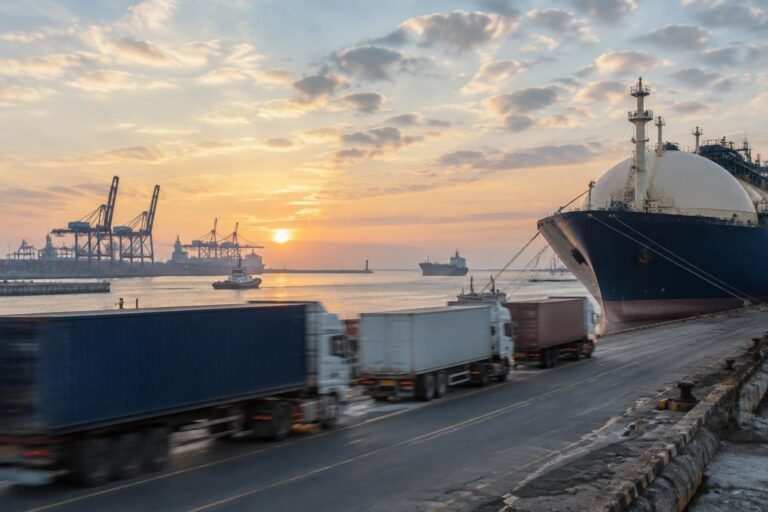
The global automotive network is being reconfigured as manufacturers, carriers and logistics partners adapt to new production geographies, geopolitical pressure and evolving energy options. Companies are no longer optimizing around a single route or transport mode; instead, they are designing supply chains that can switch between maritime, road and rail while incorporating nearshore industrial hubs.
This shift aims to preserve production continuity, maintain customer delivery dates and reduce exposure to corridor-specific risk.
Three converging forces drive the change: the rise of new manufacturing centres in regions such as North Africa and India, the need for real-time operational visibility to anticipate disruptions, and a pragmatic energy transition in shipping that treats liquefied natural gas as a transitional fuel.
Logistics operators are investing in capacity and multimodal networks, while OEMs are deploying digital control rooms to monitor suppliers, inbound parts and outbound vehicles in real time.
Regionalisation of production: North Africa and India as strategic hubs
Automotive output is migrating.
North Africa has emerged as a competitive manufacturing cluster for European supply chains, with increased vehicle and component flows across the Mediterranean. Similarly, India has shifted from a primarily consumer market to an expanding production base across autos, electronics and semiconductors, drawing foreign investment and government-backed projects. These geographic shifts change shipping patterns and amplify demand for reliable short-sea services and cross-border road and rail links. For logistics providers, proximity to final assembly plants and component factories becomes a core part of offering a resilient door-to-door logistics chain rather than a single transport leg.
Multimodal networks and fleet expansion to match changing flows
Logistics firms are responding by treating sea, road and rail as interoperable elements of one supply system. Investments include larger RoRo car carriers on Atlantic and Mediterranean corridors, expanded terminals and inland platforms, and enhanced short-sea services to relieve long-haul dependency. These moves aim to increase available capacity where new vehicle flows stress existing car-carrier markets. Fleet renewal programs and new vessels equipped with dual-fuel LNG systems illustrate the combined goals of capacity growth and emissions reduction, while operators view LNG as part of a broader mix that also includes biofuels and efficiency measures.
Digital control towers: anticipating crises and protecting delivery dates
Manufacturers are elevating situational awareness with layered command centres. One control unit continuously scans the supplier network for risks across tens of thousands of sites and dozens of countries, while complementary towers track inbound parts to plants and outbound vehicle movements to dealerships. These systems ingest frequent GPS updates, supplier alerts and inventory metrics to generate early warnings and propose alternative plans. Rapid analysis—often within 48 hours—helps teams pre-empt shortages and reroute shipments, which preserves production schedules and the customer delivery promise.
Operational metrics and outcomes
At scale, real-time monitoring supports thousands of daily shipments, hundreds of supplier locations and complex platform operations. The combination of prevention (such as dual sourcing for critical components) and fast, coordinated response reduces the incidence and impact of supply disruptions. By aligning transport progress with plant stock levels, logistics teams can select the optimal mix of modes based on cost, frequency, reliability and transit time, rather than defaulting to a single corridor.
Energy transition in maritime logistics: no single silver bullet
Decarbonisation in shipping is progressing pragmatically. Operators are balancing immediate emissions gains with long-term uncertainty about which fuel or technology will dominate. Transitional technologies like LNG are being deployed on newbuilds to reduce near-term carbon intensity, while companies also trial biofuels and invest in hull and propulsion efficiency. Future decisions will depend on technological readiness, fuel availability, infrastructure build-out, cost and regulation. As a result, fleet renewal, operational efficiency and route optimisation remain central to emission reduction strategies.
As production sites shift, trade corridors evolve and energy choices multiply, the supply chains best positioned for the decade ahead are those designed for flexibility. For automakers and logistics providers alike, resilience now equals choice: multiple transport options, regional sourcing alternatives and digital systems that detect risks early. That architecture helps protect manufacturing lines, supports timely vehicle delivery and gives manufacturers the agility to respond when disruption becomes the norm.
