

As Britain endures another intense heatwave, firefighters are working tirelessly to contain widespread wildfires that threaten homes and farmland.
The United Kingdom is grappling with a series of devastating wildfires as the country experiences its fourth heatwave of the year. With temperatures expected to climb to 35°C this week, firefighters are on high alert, battling blazes that have already consumed vast areas of farmland and threatened residential areas.
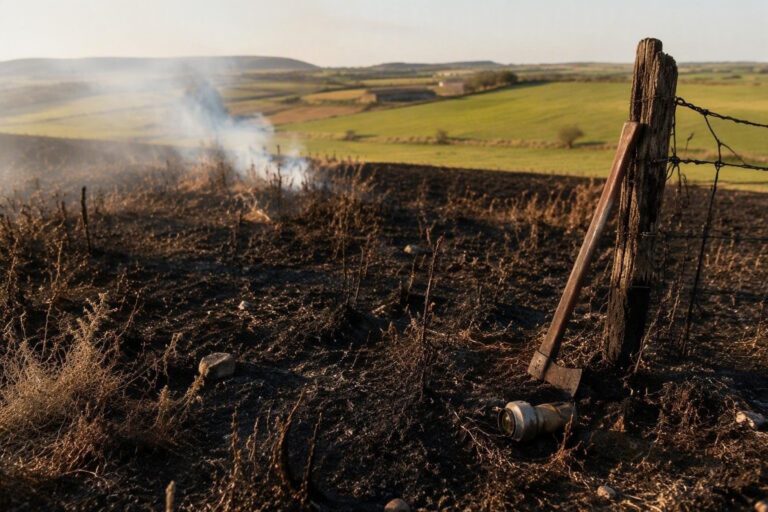
The recent heatwave has turned Britain into a tinderbox with dry conditions fueling fires across the country. In Cambridgeshire, a large field fire near the village of Peakirk required the efforts of 35 firefighters to prevent it from spreading to nearby homes and allotments.
The blaze, which spread through three fields, created thick plumes of smoke that blanketed the area.
The Spread of Wildfires Across Britain
Over the weekend, the Cambridgeshire Fire and Rescue Service responded to 20 fires within a few hours, highlighting the severity of the situation.
Another significant fire broke out in Whittlesey on Sunday, where around 50 crew members were deployed to tackle the flames. Group Commander James Ball warned that farmland blazes pose one of the biggest risks during such hot weather.
The situation is particularly dire in the Cairngorms where a major fire has been burning for two weeks. Near Nethy Bridgenine fire engines and 75 firefighters are still working to contain the blaze, which has been declared a major incident.
The Impact of Extreme Heat
The extreme heat has led to the issuance of amber health alerts for the South East, East, and East Midlands, effective from 9am on Wednesday. These alerts are in place to warn residents about the dangers of the intense heat, including the risk of falling branches. The South East is expected to experience the most extreme temperatures, with mercury levels climbing into the mid-30s.
The prolonged dry conditions have also resulted in hosepipe bans enforced by eight water companies, as water usage has increased by up to 30% on the hottest days. Six areas, primarily in north Wales, are already experiencing drought conditions, with another eight at risk.
International Context and Future Outlook
The current heatwave is part of a broader pattern of extreme weather conditions affecting Europe. In France and Spain wildfires have forced the evacuation of thousands of residents. The situation in Bordeaux is particularly alarming, with a massive fire generating its own thunderstorms and threatening to spread further due to strong winds.
Met Office Deputy Chief Forecaster Gregory Wolverson noted that while the heat will be short-lived, it will be intense. ‘This is a short-lived spell of heat, but temperatures will climb quickly through the first half of the week, particularly in the southeast,’ he said. The forecast predicts a mix of sunshine and showers for the northerly half of the country, with cooler temperatures expected from Friday.
As the climate continues to warm, the Met Office has indicated that heatwave thresholds will need to be adjusted to reflect the new normal. Meteorologist Marco Petagna explained that these adjustments are necessary to account for the consistently high temperatures caused by climate change.
The current heatwave, if it meets the official criteria, will mark the fourth such event this year. With the mean temperature for July already at 17.5°C this month is on track to be one of the hottest on record, second only to July 2006.
