

Artificial intelligence is revolutionizing the way we approach food and flavor, using graph embeddings to create novel food pairings and delicious flavor maps
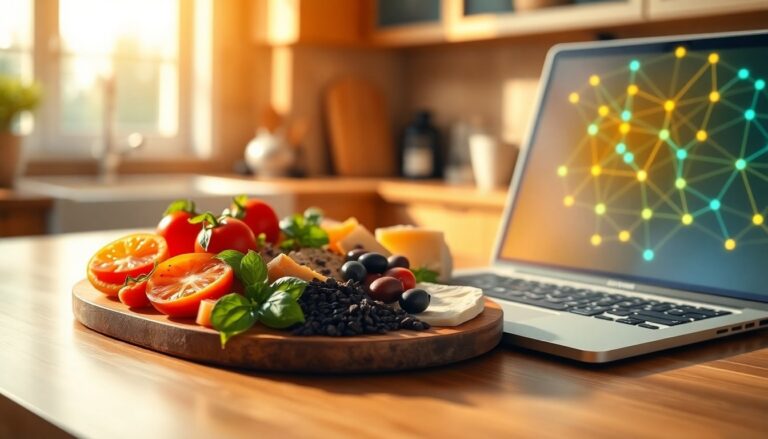
Artificial intelligence is transforming the culinary world, enabling the creation of innovative flavor maps and food pairings. By leveraging graph embeddingsresearchers can uncover novel combinations of ingredients that delight the senses. This approach has the potential to revolutionize the way we think about taste and smell.
Dataset Preparation
To create effective flavor mapsa large and diverse dataset of ingredients and their corresponding flavor profiles is required. This dataset is then used to train machine learning models that can identify patterns and relationships between different ingredients. The goal is to develop a system that can predict the likelihood of two or more ingredients complementing each other in terms of taste and smell.
Model Choices
Several machine learning models can be used for graph embeddingincluding node2vec and graph convolutional networks. These models are designed to capture the complex relationships between ingredients and their flavor profiles. By selecting the most suitable model, researchers can optimize the performance of their flavor map and increase the chances of discovering novel food pairings.
Sensory Validation
To validate the effectiveness of the flavor maps and food pairings generated by the machine learning modelssensory panels are used. These panels consist of human evaluators who taste and smell the different combinations of ingredients and provide feedback on their flavor profiles. This feedback is then used to refine the flavor maps and improve the accuracy of the machine learning models.
Pitfalls and Challenges
Despite the potential of flavor maps and food pairings generated by graph embeddingsthere are several pitfalls and challenges that need to be addressed. These include the risk of overfittingwhere the machine learning models become too specialized to the training data and fail to generalize to new ingredients and flavor profiles. Additionally, the flavor profiles of ingredients can be highly subjective and context-dependent, making it challenging to develop a system that can accurately predict the likelihood of two or more ingredients complementing each other.
