As the UK and European governments reassess their security priorities in an era shaped by transnational threats, attention is gradually shifting beyond borders, patrols and intelligence-sharing.
A recent study by the Institute for Strategic Dialogue, a London-based research centre specialising in extremism, social cohesion and security policy, highlights Morocco as a strategically important, if understated, actor in the wider Euro-Mediterranean security landscape.
The report examines how Morocco has chosen to organise religion as a component of state resilience rather than leaving it as a fragmented or contested space. For British and European policymakers, this issue is far from theoretical. Unregulated religious ecosystems — whether in fragile African states or within European societies — have repeatedly been exploited by transnational extremist networks operating across borders and digital platforms.
A distinctive political framework
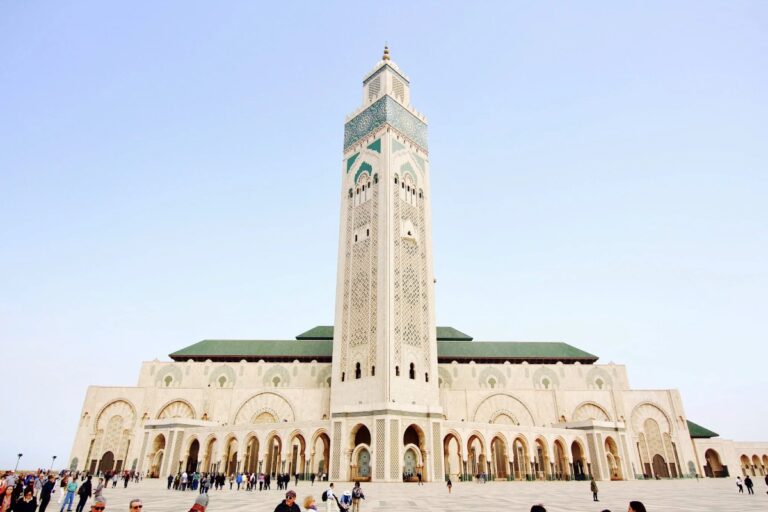
Morocco’s approach is anchored in a distinctive political framework. King Mohammed VI holds the constitutional title of “Amir al-Mu’minin”, Commander of the Faithful, which concentrates religious legitimacy and political authority within a single institution. While historically specific and not transferable to Europe, it has allowed Morocco to limit doctrinal fragmentation and reduce the space in which violent ideologies can take root.
What gives this model relevance for the UK and Europe is its outward projection. Morocco has extended religious cooperation to parts of West and Central Africa through training programmes and institutional partnerships. These regions sit at the heart of Europe’s long-term security concerns, acting as hubs for both jihadist violence and migratory flows.
For London and Brussels, the Moroccan case offers a strategic lesson rather than a policy template. Security in Europe is increasingly shaped along corridors stretching from the Sahel to the Mediterranean and into European cities. Morocco occupies a pivotal position along this chain.