

BMW M's CEO reveals why the automaker prefers endurance racing over Formula 1, highlighting the direct benefits to road car development
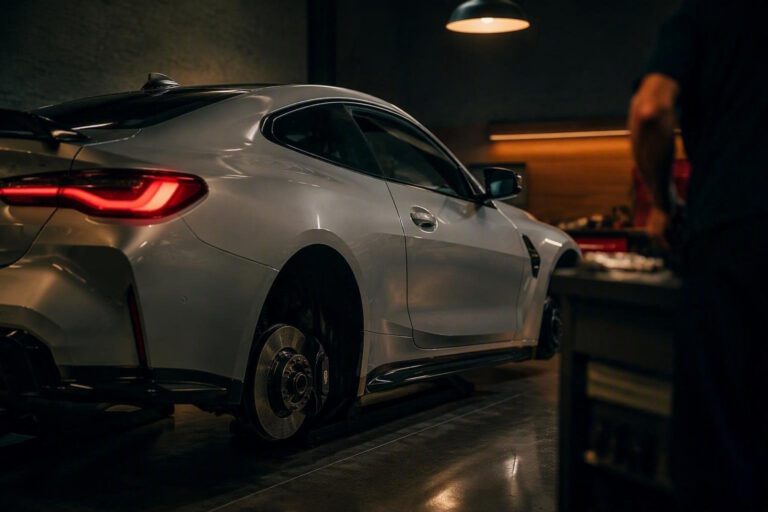
BMW has made a deliberate choice to steer clear of Formula 1, despite the series’ growing appeal to automakers. The Munich-based manufacturer, which last competed in F1 when it sold its majority stake in Sauber in 2009, has opted to concentrate its motorsport efforts on other platforms.
This strategic decision is rooted in BMW’s philosophy of technology transfer from race tracks to production lines, a principle that doesn’t align with F1’s current direction.
The automaker’s current motorsport focus is firmly on the World Endurance Championship (WEC) and the IMSA SportsCar Championship where it competes with its flagship BMW M Hybrid V8.
These series offer BMW the opportunity to test and refine technologies that can be directly integrated into its road cars, a benefit that the company finds lacking in Formula 1.
BMW’s motorsport philosophy and the F1 disconnect
Frank van Meel, the head of BMW M, has been vocal about the company’s stance on Formula 1.
He argues that F1 is too much of a laboratory and doesn’t translate well to production cars. ‘In Formula 1, it would be a completely separate technology center, detached from the rest,’ van Meel explained. This disconnect is a significant factor in BMW’s decision to avoid the series, despite the global exposure it offers.
The BMW M division is built on the principle of bringing motorsport technology to production vehicles. This philosophy is better served by the WEC and IMSA, where the company can test components and engineering solutions under conditions that closely mirror real-world driving. For instance, the M Concept New Class incorporates elements from the M4 GT3, such as airflow-optimized hoods and diffusers, demonstrating the direct benefits of this approach.
The benefits of WEC and IMSA for BMW
BMW’s involvement in the WEC and IMSA is not just about winning races; it’s about developing technology that can eventually make M cars better. The company’s M Hybrid V8 race car, for example, uses a V8 hybrid powertrain similar to those found in the M5 and XM production models. This overlap allows BMW to accelerate development by exposing components to the extreme demands of endurance racing.
The USA, which accounts for around 40% of BMW M’s volume, is a crucial market for the automaker. BMW’s success in the US can be attributed in part to its motorsport activities, making IMSA particularly important. ‘BMW grew big in the USA through motorsport,’ van Meel noted. ‘That’s why IMSA is extremely important for us.’
Technology transfer from track to road
The technology transfer from BMW’s race cars to its production models is a key aspect of its motorsport strategy. The company’s V8 hybrid powertrains, for example, are tested and refined in racing series before being integrated into road cars. This approach allows BMW to test certain aspects more quickly and in a way that’s closer to production. ‘Through these racing series, we can test certain aspects more quickly and in a way that’s closer to production,’ van Meel explained.
BMW’s focus on WEC and IMSA also allows the company to compete in some of the biggest motor races in the world, including the 24-hour events at Le Mans and Daytona. These events provide a global stage for BMW to showcase its technology and engineering prowess, further enhancing the brand’s reputation.
The future of BMW’s motorsport involvement
While BMW has no immediate plans to return to Formula 1, the company’s motorsport strategy is far from static. The M division is currently developing its first high-performance electric vehicles, and motorsport will play a crucial role in testing and refining these new technologies. The overlap between racing and road car development is particularly important as BMW navigates this transition.
In some cases, the same engineers work on both race car and road car powertrains, ensuring that the lessons learned on the track are quickly integrated into production models. This approach allows BMW to stay at the forefront of automotive innovation while maintaining its focus on endurance racing.
BMW’s decision to prioritize WEC and IMSA over Formula 1 is a strategic one, rooted in the company’s philosophy of technology transfer. While F1 offers global exposure, BMW believes that the benefits of endurance racing better align with its long-term goals. As the automaker continues to innovate, its motorsport activities will play a crucial role in shaping the future of its production vehicles.
