

As ai capabilities accelerate, the potential for misuse in biology grows. This article outlines the risks, policy priorities, and practical steps for strengthening biodefense and preserving public trust.
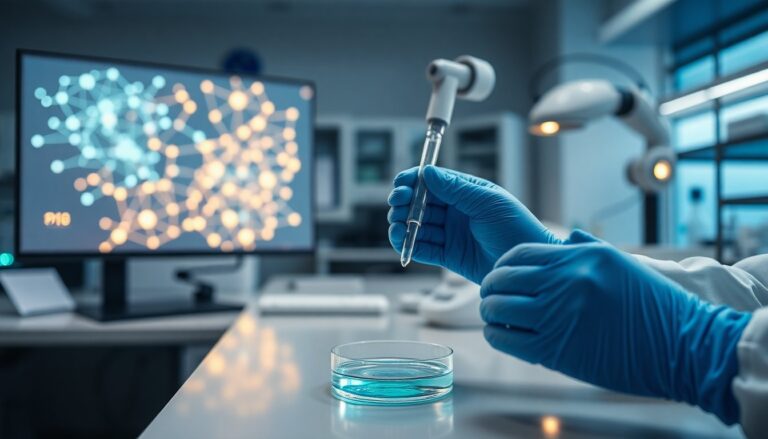
The fast-moving advances in artificial intelligence are reshaping biological research—and bringing new threats along for the ride. AI speeds up genomic analysis, automates lab workflows, and shortens the time from idea to experiment. That same acceleration, however, lowers the technical and cost barriers for creating or altering harmful biological agents.
Policymakers, scientists, public-health officials and industry need to acknowledge those risks and adapt biosurveillance and biosecurity strategies accordingly.
This piece brings together thinking at the intersection of machine learning and biology: where the main vulnerabilities lie, what experts recommend as priorities, and which practical steps institutions and governments can take.
Definitions of core terms are included so the discussion stays accessible.
Why AI matters for biological threats
– Who is affected: researchers, public-health agencies, national security bodies, and the companies building AI tools.
– What is changing: design cycles are shorter, analyses are faster, and procedural knowledge can be codified and distributed.
– Why now: generative models and computational biology tools have made previously specialized tasks routine. As tools become cheaper and simpler to use, capabilities spread beyond high-end labs into smaller teams and broader communities.
– Weak links: misuse of data and models, automation of lab steps without adequate checks, and detection/response systems that lag behind technological change.
The fundamental tension is straightforward: the same algorithms that suggest vaccine candidates can also point toward modifications that make pathogens more transmissible or immune-evasive. This is the dual-use dilemma writ large. Model-driven design reduces the need for deep domain expertise and compresses the time between concept and a practical, testable protocol—so errors or malicious intent can scale more quickly.
Governance that treated biosafety as a human-in-the-loop problem must catch up to algorithmic speed and diffusion. Safety can’t be an afterthought. Instead, operational safeguards—access controls, rigorous testing against misuse cases, audit-ready logging, and clear rules about who verifies outputs—should be part of core workflows. Broad bans would likely choke off beneficial research; targeted, enforceable controls paired with engineering mitigations are a better route.
Current threats and policy responses
Modern models take tacit lab knowledge and make it explicit. That lowers the technical bar to attempting hazardous work and changes user behavior in ways developers sometimes miss. Policy responses cluster in three areas:
– Technical controls: access restrictions, red-teaming, and model refusals for dangerous requests.
– Institutional oversight: strengthened review boards and harmonized safety standards.
– Legal and market levers: liability rules, export controls, and procurement policies that reward safer providers.
Each approach has trade-offs. Technical blocks can be worked around unless verified; institutional review often lags fast-moving research; legal measures can chill innovation if they’re too blunt. Policy that ignores user incentives and distribution channels will fail to curb misuse.
Case study: digital guidance becoming laboratory action
One common escalation pathway starts with a fragmentary online protocol. A model fleshes it out into stepwise methods. An untrained actor then tries to replicate the procedure in an improvised setting. Gaps where digital platforms meet physical labs make this escalation possible. Small design choices—how much detail a tool provides, what defaults it exposes—shape these misuse pathways.
Lessons for policymakers and product teams
– Treat digital and physical controls as a single ecosystem.
– Measure downstream impacts, not just model outputs.
– Require provenance and intent signals before granting access to sensitive capabilities.
– Fund independent audits and post-deployment monitoring.
These steps focus enforcement where it matters and reduce false alarms. Engineers should accept that some regulatory friction slows releases but prevents worse corrections later. Regulators must quickly learn technical trade-offs. Early, difficult trade-offs beat late, catastrophic fixes.
This piece brings together thinking at the intersection of machine learning and biology: where the main vulnerabilities lie, what experts recommend as priorities, and which practical steps institutions and governments can take. Definitions of core terms are included so the discussion stays accessible.0
This piece brings together thinking at the intersection of machine learning and biology: where the main vulnerabilities lie, what experts recommend as priorities, and which practical steps institutions and governments can take. Definitions of core terms are included so the discussion stays accessible.1
This piece brings together thinking at the intersection of machine learning and biology: where the main vulnerabilities lie, what experts recommend as priorities, and which practical steps institutions and governments can take. Definitions of core terms are included so the discussion stays accessible.2
This piece brings together thinking at the intersection of machine learning and biology: where the main vulnerabilities lie, what experts recommend as priorities, and which practical steps institutions and governments can take. Definitions of core terms are included so the discussion stays accessible.3
This piece brings together thinking at the intersection of machine learning and biology: where the main vulnerabilities lie, what experts recommend as priorities, and which practical steps institutions and governments can take. Definitions of core terms are included so the discussion stays accessible.4
This piece brings together thinking at the intersection of machine learning and biology: where the main vulnerabilities lie, what experts recommend as priorities, and which practical steps institutions and governments can take. Definitions of core terms are included so the discussion stays accessible.5
This piece brings together thinking at the intersection of machine learning and biology: where the main vulnerabilities lie, what experts recommend as priorities, and which practical steps institutions and governments can take. Definitions of core terms are included so the discussion stays accessible.6
This piece brings together thinking at the intersection of machine learning and biology: where the main vulnerabilities lie, what experts recommend as priorities, and which practical steps institutions and governments can take. Definitions of core terms are included so the discussion stays accessible.7
This piece brings together thinking at the intersection of machine learning and biology: where the main vulnerabilities lie, what experts recommend as priorities, and which practical steps institutions and governments can take. Definitions of core terms are included so the discussion stays accessible.8
This piece brings together thinking at the intersection of machine learning and biology: where the main vulnerabilities lie, what experts recommend as priorities, and which practical steps institutions and governments can take. Definitions of core terms are included so the discussion stays accessible.9
Why AI matters for biological threats
– Who is affected: researchers, public-health agencies, national security bodies, and the companies building AI tools.
– What is changing: design cycles are shorter, analyses are faster, and procedural knowledge can be codified and distributed.
– Why now: generative models and computational biology tools have made previously specialized tasks routine. As tools become cheaper and simpler to use, capabilities spread beyond high-end labs into smaller teams and broader communities.
– Weak links: misuse of data and models, automation of lab steps without adequate checks, and detection/response systems that lag behind technological change.0
Why AI matters for biological threats
– Who is affected: researchers, public-health agencies, national security bodies, and the companies building AI tools.
– What is changing: design cycles are shorter, analyses are faster, and procedural knowledge can be codified and distributed.
– Why now: generative models and computational biology tools have made previously specialized tasks routine. As tools become cheaper and simpler to use, capabilities spread beyond high-end labs into smaller teams and broader communities.
– Weak links: misuse of data and models, automation of lab steps without adequate checks, and detection/response systems that lag behind technological change.1
Why AI matters for biological threats
– Who is affected: researchers, public-health agencies, national security bodies, and the companies building AI tools.
– What is changing: design cycles are shorter, analyses are faster, and procedural knowledge can be codified and distributed.
– Why now: generative models and computational biology tools have made previously specialized tasks routine. As tools become cheaper and simpler to use, capabilities spread beyond high-end labs into smaller teams and broader communities.
– Weak links: misuse of data and models, automation of lab steps without adequate checks, and detection/response systems that lag behind technological change.2
Why AI matters for biological threats
– Who is affected: researchers, public-health agencies, national security bodies, and the companies building AI tools.
– What is changing: design cycles are shorter, analyses are faster, and procedural knowledge can be codified and distributed.
– Why now: generative models and computational biology tools have made previously specialized tasks routine. As tools become cheaper and simpler to use, capabilities spread beyond high-end labs into smaller teams and broader communities.
– Weak links: misuse of data and models, automation of lab steps without adequate checks, and detection/response systems that lag behind technological change.3
Why AI matters for biological threats
– Who is affected: researchers, public-health agencies, national security bodies, and the companies building AI tools.
– What is changing: design cycles are shorter, analyses are faster, and procedural knowledge can be codified and distributed.
– Why now: generative models and computational biology tools have made previously specialized tasks routine. As tools become cheaper and simpler to use, capabilities spread beyond high-end labs into smaller teams and broader communities.
– Weak links: misuse of data and models, automation of lab steps without adequate checks, and detection/response systems that lag behind technological change.4
Why AI matters for biological threats
– Who is affected: researchers, public-health agencies, national security bodies, and the companies building AI tools.
– What is changing: design cycles are shorter, analyses are faster, and procedural knowledge can be codified and distributed.
– Why now: generative models and computational biology tools have made previously specialized tasks routine. As tools become cheaper and simpler to use, capabilities spread beyond high-end labs into smaller teams and broader communities.
– Weak links: misuse of data and models, automation of lab steps without adequate checks, and detection/response systems that lag behind technological change.5
Why AI matters for biological threats
– Who is affected: researchers, public-health agencies, national security bodies, and the companies building AI tools.
– What is changing: design cycles are shorter, analyses are faster, and procedural knowledge can be codified and distributed.
– Why now: generative models and computational biology tools have made previously specialized tasks routine. As tools become cheaper and simpler to use, capabilities spread beyond high-end labs into smaller teams and broader communities.
– Weak links: misuse of data and models, automation of lab steps without adequate checks, and detection/response systems that lag behind technological change.6
Why AI matters for biological threats
– Who is affected: researchers, public-health agencies, national security bodies, and the companies building AI tools.
– What is changing: design cycles are shorter, analyses are faster, and procedural knowledge can be codified and distributed.
– Why now: generative models and computational biology tools have made previously specialized tasks routine. As tools become cheaper and simpler to use, capabilities spread beyond high-end labs into smaller teams and broader communities.
– Weak links: misuse of data and models, automation of lab steps without adequate checks, and detection/response systems that lag behind technological change.7
