

Discover the visual cues that distinguish concept cars from production models at motor shows
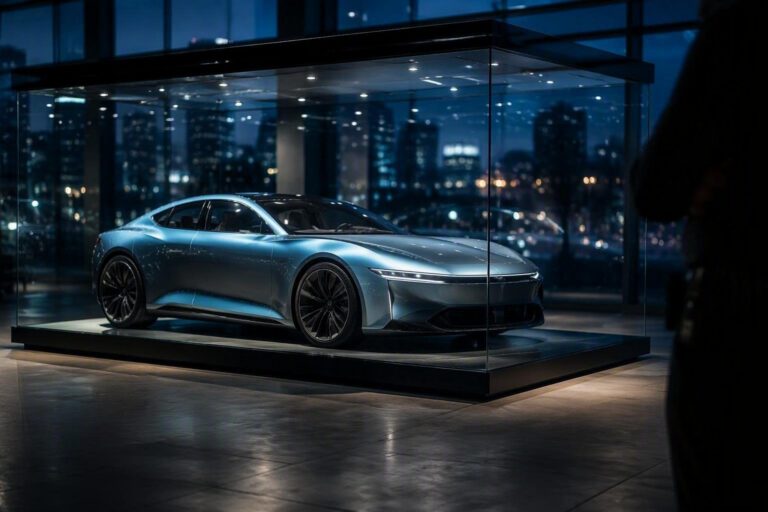
The annual motor shows are a spectacle of innovation and design, with car manufacturers showcasing their latest creations. However, it can be challenging to distinguish between concept cars and production models. Concept cars are often used to gauge public reaction and test new designs, while production models are the final versions of cars that will be available for purchase.
One of the primary ways to identify a concept car is by its proportions. Concept cars often have exaggerated features, such as large wheels, sloping lines, and unusual shapes. In contrast, production models tend to have more conservative designs that prioritize functionality and practicality.
Visual Cues
Another way to spot a concept car is by looking for mirrors and other features that are not typically found on production models. Concept cars may have unusual mirror designs or no mirrors at all, while production models usually have traditional mirrors.
Additionally, concept cars may have tyre sizes that are not suitable for production, such as extremely large or small tyres.
Lighting is also an important aspect to consider. Concept cars often feature elaborate lighting systems, including LED lights, neon lights, or other unique lighting designs. Production models, on the other hand, tend to have more straightforward lighting systems.
Historic Examples
Looking at historic examples from major motor shows can provide valuable insights into the differences between concept cars and production models. For instance, the BMW GINA concept car, unveiled in 2008, featured a unique design with a flexible skin that could change shape. In contrast, the production model of the BMW Z4 had a more traditional design.
Another example is the Toyota FT-1 concept car, which was showcased in 2014. The FT-1 had a sleek and futuristic design, but the production model of the Toyota 86 had a more subdued design.
Checklist for Spotting Realistic Tech
To spot realistic tech in concept cars, look for the following features:
- Aerodynamics Does the car have features that improve aerodynamics, such as air intakes or spoilers?
- Materials Are the materials used in the car’s construction realistic, such as carbon fiber or aluminum?
- Engine Is the engine used in the concept car a realistic option for production, or is it an experimental design?
By considering these factors and looking for visual cues, you can better distinguish between concept cars and production models at motor shows.
