London’s iconic shopping avenue will go car‑free for the first time next week.
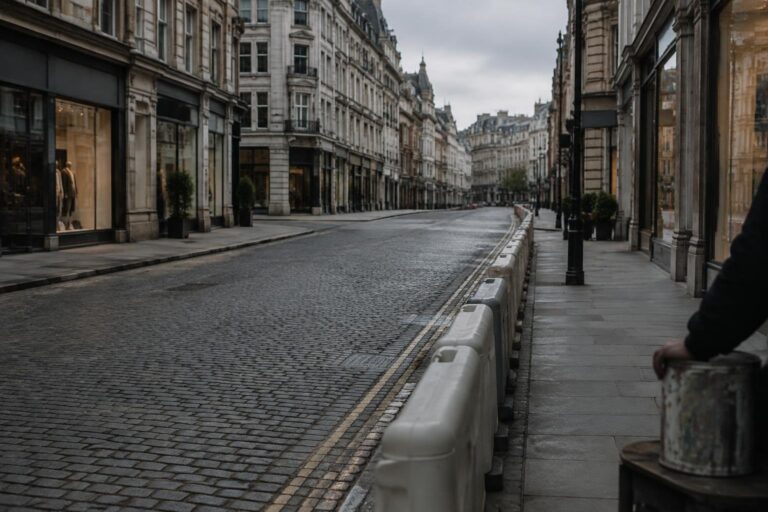
From Monday, 26 October 2026, a stretch of nearly one kilometre along London’s premier retail corridor will be sealed off to ordinary traffic. The closure runs from Orchard Street – the access point next to Selfridges and Marble Arch – eastward to Great Portland Street, just beyond Oxford Circus.
This marks the inaugural phase of a long-term pedestrianisation scheme that aims to transform the bustling thoroughfare into a predominantly foot-friendly public space.
How the plan came together
The idea of banning vehicles on Oxford Street is not new.
London Mayor Sadiq Khan first floated a full pedestrianisation in his 2016 election platform, and the concept resurfaced in September 2024 when he announced a city-wide regeneration programme. Central to that effort was the creation of a Mayoral Development Area and the establishment of the Oxford Street Development Corporation (OSDC), which shifted planning and highway authority from Westminster Council to City Hall.
A public consultation held in early 2025 recorded a 66 % favourability rate for a traffic-free street, despite lingering concerns from Westminster about displaced traffic and noise.
What the October shutdown entails
The designated kilometre will be free of cars, buses, taxis, private hire vehicles, bicycles, electric scooters and pedicabs from the evening of Sunday, 25 October. Emergency services and essential deliveries will retain limited overnight access, and mobility scooters are exempted. Several north-south streets – including Orchard Street, Duke Street, Regent Street and Great Portland Street – will continue to provide crossing points, although short-term closures may occur to facilitate construction.
TfL confirms that the road layout itself will stay unchanged during the initial phase, allowing the OSDC to observe how pedestrians, retailers and accessibility groups use the space. Temporary seating, planting and pop-up venues are slated for 2027, once data from the trial period have been analysed.
Bus and cycle rerouting
Buses that currently ply the affected segment will be diverted to surrounding streets such as Wigmore Street, Henrietta Place and Cavendish Place. New stops will be situated roughly 200 metres from the closed zone, and passengers are advised to verify routes before travelling. The London Underground and overground rail services will operate as normal. Cyclists, including e-bikes, will be redirected onto parallel routes, a move intended to preserve a largely pedestrian ambience rather than merely create a car-free lane.
Looking ahead: staged transformation
The October closure is deliberately limited in scope, especially given the upcoming Christmas shopping rush. By keeping the street physically intact while removing through traffic, authorities can collect feedback from shoppers, local businesses and disability advocates. In 2027, the city plans to install permanent benches, street-level greenery and clearer way-finding, paving the way for a future where Oxford Street functions as an open-air piazza rather than a congested traffic artery. The initiative, rooted in more than six decades of debate, reflects a broader ambition to reshape one of Britain’s busiest shopping streets into a safer, greener, and more vibrant urban space.