A 1993 self-portrait by Jack Vettriano goes on display at National Galleries Scotland on March 1, the first of two works from his estate to be shown over a six-year period
Topics covered
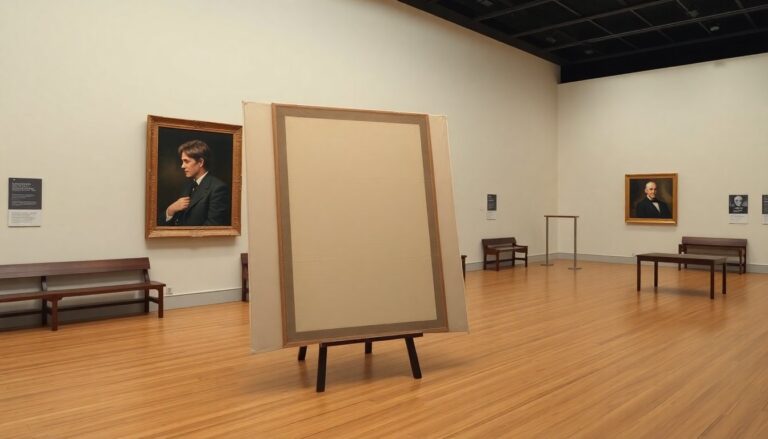
The National Galleries Scotland: Portrait in Edinburgh will present a self-portrait by Scottish artist Jack Vettriano, timed to coincide with the first anniversary of his death. The work, titled Portrait Of The Artist, was created in 1993 and will go on public display from March 1.
This showing is the opening act in a planned rotation of two self-portraits loaned by the artist’s estate, arranged to occupy the gallery’s modern portrait display across the coming years.
The arrival of this painting to the Portrait gallery brings a chance to reassess Vettriano’s legacy within Scottish visual culture.
Known widely as the “People’s Painter,” Vettriano’s path from a technical trade to international recognition is central to the narrative around these works. The gallery’s acquisition on loan reflects both public interest and a curatorial effort to include widely recognized contemporary artists in the conversation about national portraiture.
About the exhibition plan
The gallery will exhibit Portrait Of The Artist at National Galleries Scotland: Portrait beginning on March 1, remaining on view until early. After that interval the displayed work will be replaced by the second self-portrait from the estate, the 1999 painting titled Homage To Fontana?. Together these loans will be shown consecutively over a planned six-year period, allowing visitors to engage with Vettriano’s self-representation at different moments in his career.
Rotation and curatorial context
The two paintings will be part of the gallery’s Modern Portrait section, positioned among contemporary portraits of Scots who have made an impact both locally and abroad. Curators describe the arrangement as an opportunity to situate Vettriano’s work within a broader portrait tradition and to prompt fresh conversations about audience reception and national identity.
About the works and artistic references
Portrait Of The Artist dates from 1993, coming a year after Vettriano completed one of his most famous images, The Singing Butler. The later piece, Homage To Fontana? (painted in 1999), includes visible slashes on the canvas that invite comparison with the work of Lucio Fontana. Art commentators note that the title and treatment nod toward Fontana’s experiments, in which cuts and punctures in the surface aimed to introduce an infinite dimension beyond the painted plane.
Technique and influences
Vettriano was largely self-taught. He began painting after receiving a box of watercolours as a gift at age 21 and developed his approach by copying Old Masters and later studying Impressionists and Scottish predecessors. His technique evolved into an accessible, narrative-driven style that appealed to a broad public audience. The forthcoming display underscores those formative influences while also highlighting Vettriano’s exploration of self-image and art-historical dialogue.
Life story and public reception
Born in Fife, Vettriano left formal education at 15 to train as a mining engineer. His artistic breakthrough came in 1988 when two works he submitted to the Royal Scottish Academy’s annual show sold on the first day. That success helped propel him into an international profile throughout the 1990s. The National Galleries’ decision to accept the estate’s loan and to time the unveiling on the anniversary of his death speaks to Vettriano’s continuing significance in public memory and cultural conversation.
Imogen Gibbon, head of portraiture and photography and chief curator at National Galleries Scotland, commented that showing a self-portrait on this particular date felt especially appropriate as a way to honour Vettriano’s contribution to Scottish art. The gallery has also publicly thanked the artist’s estate for proposing and supporting the loan arrangement.
Visitor information and significance
The exhibition offers both long-time admirers and new viewers a close encounter with a work that sits at a pivotal moment in Vettriano’s career. Located within a mile of where some of his early influences were viewed, the gallery setting provides historical resonance. For researchers and fans alike, the back-to-back display of the two self-portraits over successive years will create a rare longitudinal display, inviting comparisons between works, technique, and thematic concerns.
Beyond the immediate display, the show invites questions about how popular appeal and institutional recognition intersect. Placing Vettriano’s self-portraits among contemporary Scottish portraiture allows the public to evaluate his place within the national artistic story and to consider how self-representation functions in modern visual culture.