

Discover simple, reliable ways to cope with winter storms using portable power stations, solar panels and battery packs to keep heating, refrigeration and communication running.
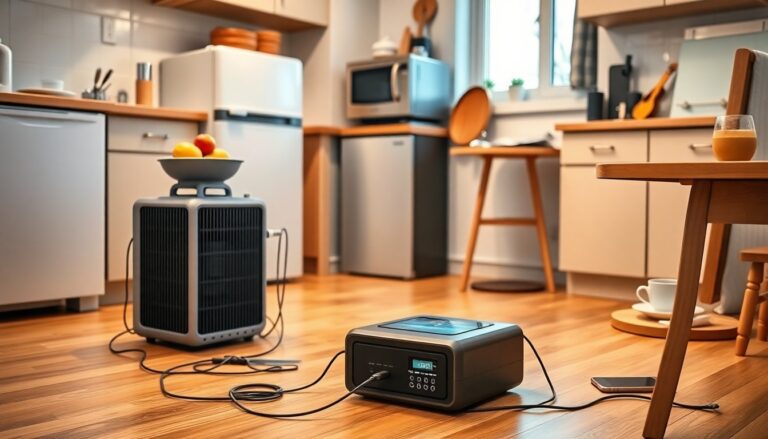
Storms and outages move fast—especially in winter. A few hours without power can mean frozen pipes, spoiled food, and no way to call for help. Thoughtful, modest investments in portable power stations and solar-ready generators can keep the essentials running: heat, refrigeration and communications.
The aim is simple: turn a blackout from a crisis into a manageable inconvenience. Below is a friendly, practical guide to choosing, installing and using these systems so you’re prepared when the lights go out.
Why portable power matters in winter
– Protect health.
Losing heat during freezing nights is dangerous for children, older adults and anyone with medical needs. Refrigerators and freezers preserve food and medicines—when they stop, problems start fast. Phones and routers going dark cut off emergency contacts.
– Focused, affordable backup.
Portable units let you power what matters without the expense and complexity of a whole-house generator. You can prioritise loads—keep the fridge and a few lights on first, then add a heater or medical device if capacity allows.
– Practical resilience. Small businesses and households both benefit. Backup power is increasingly a sensible part of contingency planning and can influence insurance and compliance decisions.
Start by listing what you really need
Make a simple inventory: which devices must run during an outage and how much power do they draw? That list is the foundation for choosing the right unit.
Match loads to capacity
– Note typical draws. Phone chargers: 5–20 W. Fridges: often 100–200 W running average (higher at startup). Small fan heaters: 1,000–1,500 W (with a higher surge). Medical equipment varies—always check the label.
– Read battery capacity in watt-hours (Wh). A 1,200 Wh battery running a 100 W appliance will last roughly 10–12 hours after inverter losses. More Wh = more runtime.
– Plan for surges. Compressors and motors need extra current at startup. Pick an inverter with a surge rating comfortably above your peak demand—usually two to three times the continuous draw.
Sizing: small, medium and large systems
– Small (hundreds of Wh): Great for phone charging, LED lights and small electronics—keeps basics running for a few hours.
– Medium (1,000–3,000 Wh): Handles short-term refrigeration, several devices and modest heating for brief outages or RV use.
– Large (4,000 Wh+ or expandable): Can cover essential circuits almost like a whole-house backup when properly configured and paired with expansion batteries.
Concrete examples
– ~500 Wh unit (Explorer 500 class): Keeps phones, lights and a small fridge running for several hours.
– ~2,000 Wh pack: Can run a 200 W fridge for 8–10 hours and support overnight use of multiple devices.
– Multi-kWh modular systems: Best for sustained household needs—sleeping areas, refrigeration and selective heating—because you can add battery packs as needed.
Battery chemistry, durability and cost
– Chemistry matters. LiFePO4 (lithium iron phosphate) offers longer cycle life, better thermal stability and generally safer behaviour in cold conditions than older lithium chemistries.
– Think total cost of ownership. A higher purchase price can be worthwhile if the battery lasts longer and needs fewer replacements. Compare cycle ratings, depth-of-discharge limits and warranties.
– After-sales support. Confirm service coverage, response times and whether loan or replacement units are offered during repairs.
Installation, safety and maintenance
– Follow manufacturer guidance for ventilation, operating temperatures and placement. Batteries lose life and capacity if kept too cold—store and operate them within the recommended range.
– For any hardwired integration, use a transfer switch installed by a qualified electrician. That separates the grid from your backup system and usually satisfies insurers.
– Use properly rated cables and connectors to avoid voltage drop and overheating. Label critical circuits and test the system periodically so anyone in the household can switch it on quickly.
– Keep records: serial numbers, commissioning dates, receipts and warranty documents—handy for insurance claims or service calls.
Extending runtime with solar and other recharge options
– Add solar for longer outages. Panels can recharge a portable station during daylight, turning a short-term solution into a longer-lasting one. Match panel wattage and the charger’s input limits to figure daily recharge potential.
– Other charging routes: shore power, vehicle alternators or a small generator can top up batteries when sunlight is scarce. Plan logistics for extended outages—where and how you’ll recharge.
– Consider modular expansion. Extra battery packs lengthen runtime without replacing the base unit, but they add maintenance and deployment complexity.
Operational tips for winter outages
– Pre-winter checklist: identify critical loads, test equipment, label circuits and run a practice switch to backup power with household members.
– Prioritise loads: start with refrigeration and communications, then add heating or medical devices depending on capacity.
– Protect batteries from the cold. Capacity drops in low temperatures—keep units in insulated spaces when possible and bring them into warmer spots for charging.
– Run drills and document procedures so everyone knows how to operate systems safely and confidently.
Why portable power matters in winter
– Protect health. Losing heat during freezing nights is dangerous for children, older adults and anyone with medical needs. Refrigerators and freezers preserve food and medicines—when they stop, problems start fast. Phones and routers going dark cut off emergency contacts.
– Focused, affordable backup. Portable units let you power what matters without the expense and complexity of a whole-house generator. You can prioritise loads—keep the fridge and a few lights on first, then add a heater or medical device if capacity allows.
– Practical resilience. Small businesses and households both benefit. Backup power is increasingly a sensible part of contingency planning and can influence insurance and compliance decisions.0
Why portable power matters in winter
– Protect health. Losing heat during freezing nights is dangerous for children, older adults and anyone with medical needs. Refrigerators and freezers preserve food and medicines—when they stop, problems start fast. Phones and routers going dark cut off emergency contacts.
– Focused, affordable backup. Portable units let you power what matters without the expense and complexity of a whole-house generator. You can prioritise loads—keep the fridge and a few lights on first, then add a heater or medical device if capacity allows.
– Practical resilience. Small businesses and households both benefit. Backup power is increasingly a sensible part of contingency planning and can influence insurance and compliance decisions.1
