Israel's recent attacks in Lebanon have resulted in nine deaths in Tyre, with forced evacuations and escalating tensions.
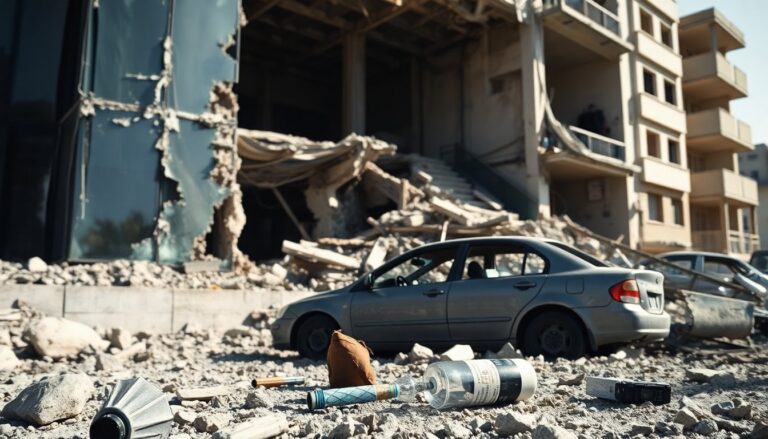
The conflict between Israel and Lebanon has intensified, with Israeli forces killing nine people in Tyre over the past 24 hours. This escalation follows forced displacement orders issued to the city’s residents, adding to the growing humanitarian crisis in the region.
The recent attacks come amid a backdrop of heightened tensions, with Iran warning of crushing measures if Israel continues its assault on Lebanon. The situation has drawn international concern, with the International Rescue Committee (IRC) highlighting the worsening humanitarian crisis and the need for a lasting ceasefire.
Forced Evacuations and Deadly Strikes in Tyre
Israeli forces have targeted the southern city of Tyre, issuing forced displacement orders that include the city’s Christian quarter. The civil defence agency reported that an Israeli airstrike hit a popular housing area, causing significant damage and loss of life.
Among the casualties were four paramedics, and a UNESCO World Heritage Site was also damaged in the bombardment.
The wave of deadly strikes follows a series of attacks in recent days. On Monday, five people were killed and eight wounded near a Red Cross centre in Tyre. The Lebanese Ministry of Health has reported that the overall death toll from the Israeli offensive since March 2 has risen to 3,637, with a further 11,188 wounded. More than one million people, or a fifth of Lebanon’s population, have been displaced.
Hezbollah’s Operations and Strategic Targets
The Lebanese armed group Hezbollah has claimed responsibility for 16 operations against Israeli forces, including near the strategic Beaufort Castle. The group targeted and destroyed two Israeli military bulldozers in the village of Yohmor al-Shaqif and struck multiple enemy troop concentrations. Hezbollah also intercepted an Israeli drone operating in the airspace over Iqlim al-Tuffah.
Lebanon was drawn into the US-Israel war on Iran on March 2, when Hezbollah fired rockets at northern Israel in response to continued Israeli attacks and the killing of Iranian Supreme Leader Ali Khamenei on February 28. Despite a ceasefire agreed between the US and Iran on April 8, Israel has not halted its campaign in Lebanon, insisting the two fronts are separate.
International Reactions and Humanitarian Concerns
Iran’s military has warned that continued aggression in southern Lebanon will be met with much more severe and crushing measures. However, Israeli Minister of Defence Israel Katz has pledged to press ahead with operations against Hezbollah and to launch attacks on Beirut’s southern suburbs in response to any strikes on northern Israel.
Lebanese Prime Minister Nawaf Salam has reported that Israel has carried out nearly 3,500 air strikes, 407 demolitions, and six so-called razing operations since April 16. The IRC has warned that 94 percent of displaced people are struggling to meet their basic needs, with many returning to find their homes or entire villages destroyed.
As the situation continues to escalate, the international community watches closely, with calls for a lasting ceasefire growing louder. The humanitarian crisis in Lebanon is worsening, and the need for a resolution to the conflict is more urgent than ever.