

The revival of Chadwick Boseman’s play Deep Azure at Shakespeare's Globe puts his early writing back in the spotlight, blending hip-hop theatre, Shakespearean roots and urgent social themes
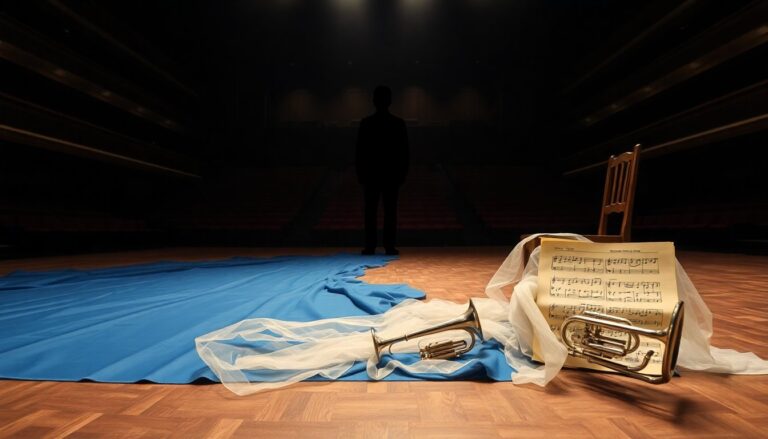
Deep Azure’s return to the Sam Wanamaker Playhouse has done more than revive a powerful piece of theatre: it has reframed Chadwick Boseman not only as a screen star but as a serious, formally ambitious playwright. Staged by Tristan Fynn-Aiduenu, this revival centers music, memory and mourning in the wake of a police shooting.
Azure, the grieving fiancée, and the spectral figure of Deep navigate a world made strange by loss; the play’s inspiration — the 2000 killing of Prince Jones — is acknowledged openly, with support from Boseman’s family and Jones’s relatives. That combination of personal legacy and civic urgency helps explain why the production is resonating well beyond the Globe’s oak-and-candle intimacy.
Why this matters now
– Artistic weight: Deep Azure was born from Boseman’s training at Howard University and the British American Drama Academy; its language blends poetic lyricism with blunt testimony, and the revival leans into musical and movement-driven textures to make grief palpable.
– Family and community backing: Endorsement by Boseman’s brothers and widow, and the involvement of the Prince Jones Foundation, turn the show into both memorial and platform for advocacy — scholarships, outreach and policy conversation follow the run as deliberately as the performances do.
– Institutional fit: The Sam Wanamaker Playhouse is uniquely suited to this material — its scale and atmosphere amplify ritual and intimacy, and the Globe’s stature gives the revival a broader public forum.
The market forces behind the revival
In recent seasons theatres have shown a growing appetite for revivals tied to well-known cultural figures or estates. Several visible trends help explain programming choices like this one:
– Box-office signals: Ticketing and advance-sales data point to stronger demand for works that carry recognizable names or clear estate endorsements, particularly among younger audiences seeking socially engaged drama.
– Philanthropy and partnerships: Estate-backed projects and productions with community partners are often more successful in attracting grants and sponsorship, reducing financial risk for producing houses.
– Programming strategy: Venues increasingly mix established repertoire with rediscoveries — a portfolio approach that balances artistic experimentation with audience draw and fundraising potential.
Artistic and operational variables
Staging Deep Azure raises both creative opportunities and practical constraints:
– Form and casting: The production’s hybrid language — from measured rhyme to plainspoken testimony — benefits from musicians, movement specialists and actors fluent in rhythm and heightened speech. That can raise both artistic payoff and payroll complexity.
– Venue limitations: The Playhouse’s intimacy shapes design and rehearsal choices; what reads as propulsive in a small room might not travel easily to larger stages without recalibration.
– Reputation risks: Presenting a work linked to a beloved film star brings heightened expectations; audiences come with a cinematic frame of reference that theatre must meet on its own terms.
Wider sector impacts
If Deep Azure’s revival continues to draw attention and funding, it may have ripple effects:
– Programming: Regional and repertory houses may be more inclined to stage estate-supported revivals or hybrid-text works that combine music, ritual and social themes.
– Training and employment: Conservatories could broaden curricula toward hybrid dramaturgies (spoken-word, jazz-inflected rhythms, movement), while theatres may open more roles for musicians and movement artists.
– Philanthropic behavior: Funders tracking measurable community outcomes may prioritize projects that pair performances with educational and advocacy partnerships.
Risks and opportunities
– Risks: Polarised reception, potential protests, or a mismatch between cinematic fame and theatrical expectations could dent box office or reputational gains. Rights and ethical considerations around depicting real violence also require careful handling.
– Opportunities: Strong early sales, benefit performances and coordinated outreach can translate short-term interest into longer-term touring, educational programming and sustained donations — as initial figures tied to the Globe run already suggest.
Where this might lead
Early indicators — ticket demand, media coverage and benefit-performance donations — point to continued visibility for Deep Azure and renewed scholarly interest in Boseman’s dramatic voice. The revival functions on multiple levels: as a theatrical work of craft, a family-backed memorial, and a civic provocation that channels grief into public conversation. Whether it sparks a broader programming shift depends on how well theatres convert cultural relevance into sustainable models — touring plans, education partnerships and funder commitments will be decisive.
In short: Deep Azure’s Sam Wanamaker run has reignited attention to a quieter side of Chadwick Boseman’s practice while flattering several intersecting currents in contemporary theatre — estate-led revivals, socially engaged programming, and hybrids of music and speech. The production’s immediate success will shape not only Boseman’s posthumous reputation but also how institutions think about risk, legacy and the audiences they hope to reach.
